How to Build Safe Niche Edits Without Hurting SEO
Home / Blog
You bought niche edits, built backlinks, and expected higher rankings. Instead, traffic stayed flat, or some links added no real value. This usually happens when links are chosen for quantity, not quality.
Learning how to build safe niche edits starts with relevance, trust, and natural placement. A niche edit should fit inside useful content on a credible website. When links look forced or appear on weak pages, they can hurt SEO performance.
This guide explains how to build safe niche edits without hurting SEO. You will learn why niche edits fail, how to check link quality, which tools to use, and how to avoid risky backlink mistakes.
Why Most Niche Edits Fail
Most niche edits fail because they use cheap bulk links, irrelevant placements, exact-match anchor spam, non-indexed pages, and low-quality target content. These problems reduce link relevance, weaken authority signals, and increase the risk of algorithmic detection.
Cheap Bulk Links
Cheap bulk links often come from low-quality websites such as PBNs, article farms, and auto-generated blogs. These sites typically have weak editorial standards and little topical relevance.
In many cases, bulk link packages include 50 to 500 backlinks from unrelated sources, including business directories, coupon websites, and expired domains.
Because search engines actively monitor manipulative link-building tactics, Google identifies large-scale link schemes, paid links, and automated links as spam practices.
Traffic quality plays an important role as well. Pages with 0 monthly visits, declining traffic, or deindexed content usually provide little SEO value.
Irrelevant Placements
Irrelevant placements reduce topical relevance and weaken SEO performance. For example, a cybersecurity page should not receive links from websites focused on pet care, wedding planning, or celebrity news.
Instead, place links within content that shares relevant topics, audiences, and search intent. Before adding a link, review nearby headings, paragraphs, and related links to confirm contextual alignment.
Search engines evaluate the surrounding context of a link when determining relevance. Strong contextual signals can improve the value of a placement.
Exact Match Spam
Exact-match anchor spam creates unnatural link patterns. Common examples include repeated anchors such as "best SEO agency," "cheap backlinks service," and "buy niche edits."
A safer approach is to use multiple anchor types, including branded anchors, URL anchors, and partial-match anchors. Examples include company names, homepage URLs, and descriptive phrases.
At the same time, avoid repeating the same commercial anchor across 10, 20, or 50 backlinks. Consistent repetition creates patterns that are easier for search engines to detect.
Additional Failure Factors
Many niche edits underperform because the target page lacks quality content. Pages with thin content, outdated information, or weak internal linking often struggle to generate ranking improvements.
Another common issue is indexing. Links placed on non-indexed pages, orphan pages, and low-crawl pages may pass little or no value.
Outbound link saturation can further reduce effectiveness. Pages containing 50 to 200 outbound links often pass less authority than pages with a more balanced link profile.
Successful niche edits require 6 key conditions. Focus on relevant websites, natural anchors, indexed pages, quality content, organic traffic, and reasonable outbound link counts.
How to Do Niche Edits Safely
Check website quality, anchor text, link placement, and backlink profile balance to perform niche edits safely. Avoid links created solely to manipulate rankings.
Evaluating Websites
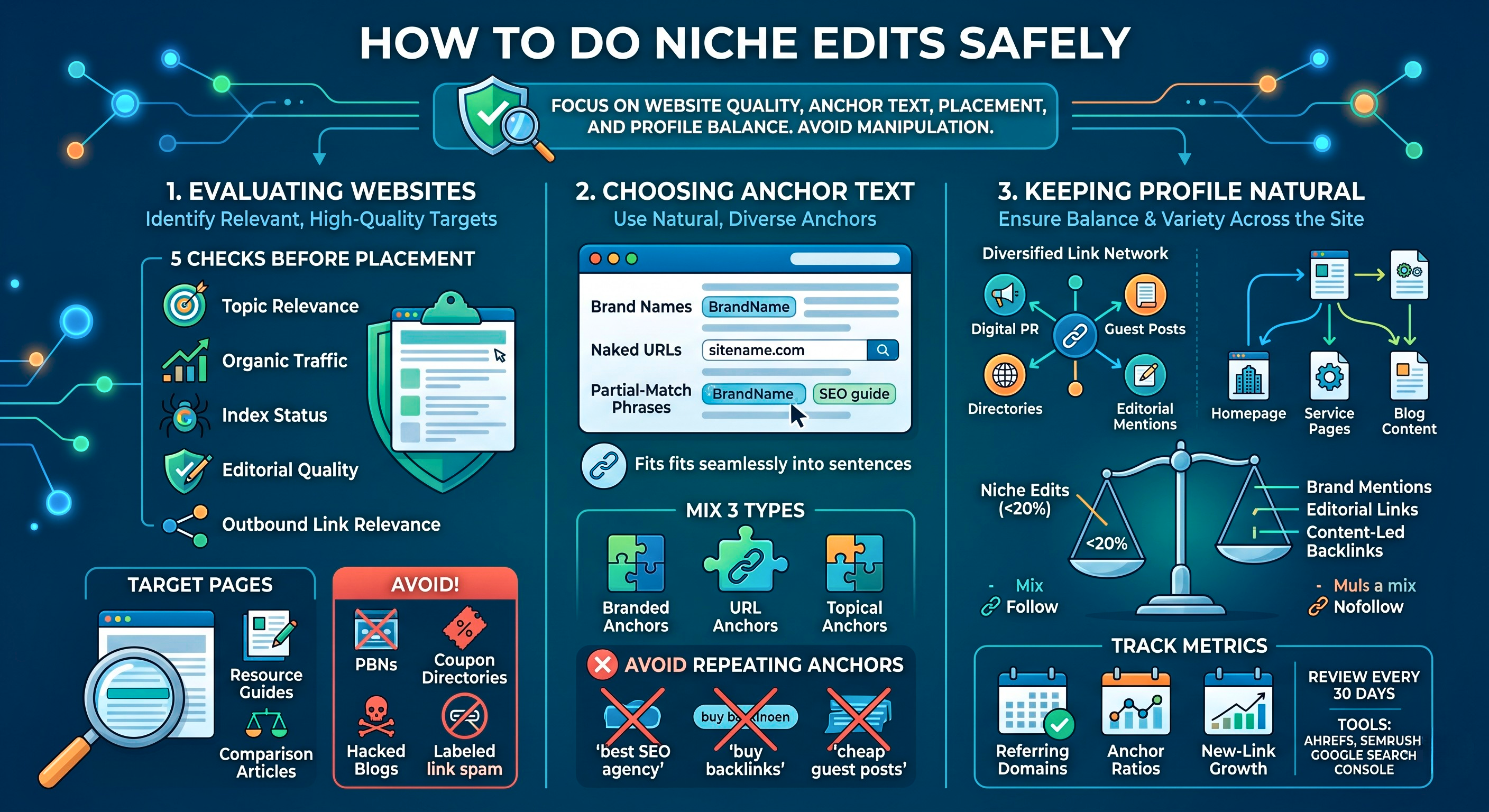
Start by evaluating websites for relevance, organic traffic, indexing status, editorial quality, and outbound link quality. Focus on pages such as blog posts, resource guides, and comparison articles.
Avoid websites like PBNs, coupon directories, and hacked blogs. Google considers links created mainly to manipulate rankings as link spam.
Apply 5 checks before placement: topic relevance, organic traffic, index status, editorial quality, and outbound link relevance. Confirm that the page is indexed and updated regularly.
Choosing Anchor Text
Select anchor text that fits naturally within the content and adds value to readers. Use anchors like brand names, naked URLs, and partial-match phrases.
Avoid repeating anchors such as “best SEO agency,” “buy backlinks,” and “cheap guest posts”. Repetition signals manipulation.
Mix 3 anchor types across campaigns: branded anchors, URL anchors, and topical anchors.
Keeping Profile Natural
Maintain a natural backlink profile by spreading links across sources, pages, and anchor types. Include sources such as digital PR, guest posts, directories, and editorial mentions.
Link to a variety of pages, including the homepage, service pages, and blog content. Do not direct every link to a single money page.
Track metrics like referring domains, anchor ratios, and new-link growth. Review performance every 30 days using tools such as Ahrefs, Semrush, and Google Search Console.
Limit niche edits to under 20% of new monthly links. Balance them with brand mentions, editorial links, and content-led backlinks, including a mix of follow and nofollow links.
Tools to Check Niche Edit Quality
Use Ahrefs, Semrush, and Google Search Console to check niche edit quality before trusting any backlink. Together, these tools help uncover issues such as spam, traffic declines, and anchor text overuse.
Ahrefs
Ahrefs helps review backlinks, referring domains, and anchor texts. Focus on pages such as blog posts, resource guides, and comparison articles.
Pay attention to metrics like Domain Rating, organic traffic, and linked domains. According to Backlinko, the #1 Google result has 3.8x more backlinks than positions #2–#10. Before placing a link, confirm the page is indexed and actively updated.
Semrush
Semrush identifies toxic links, spam signals, and authority gaps. Look for warning signs such as link networks, money anchors, and irrelevant categories.
Be cautious with directories, expired domains, and low-traffic blogs. Risk increases when pages link to casinos, payday loans, or adult websites.
Google Search Console
Google Search Console provides backlink data directly from Google. Review links, anchor texts, and top-linked pages to identify potential issues.
Service pages, product pages, and blog articles deserve special attention. When rankings decline, compare backlink changes with drops in impressions, clicks, or keyword positions.
Metrics That Matter
Focus on 5 core metrics before keeping a niche edit:
-
Relevance – Match topics such as SaaS, finance, or healthcare.
-
Traffic – Look for organic keywords, branded searches, and referral visits.
-
Authority – Evaluate trusted domains, editorial content, and indexed pages.
-
Anchor Text – Use branded, URL, and partial-match anchors. Maintain a natural mix across campaigns.
-
Outbound Links – Ensure links point to credible websites rather than spam networks.
For the safest profile, spread links across different pages, sources, and anchor types. Include both follow and nofollow links to maintain a natural backlink profile.
Common Mistakes to Avoid
Buying bulk links is a common SEO mistake. Google warns that most websites using purchased links risk penalties. Examples include Fiverr SEO links, BlackHatWorld link packs, and PBN backlinks. These links often have low trust scores and appear on unrelated content.
Relevance is key for link value. Search engines prioritize backlinks from sites closely connected to your niche. For instance, tech blogs like TechCrunch, The Verge, and Wired linking to a crypto site are valuable. By contrast, irrelevant links from unrelated industries, such as fashion blogs linking to software, provide minimal SEO benefit.
Overusing anchors can also trigger penalties. Repeating identical anchor text signals manipulation. Examples include “best SEO tools,” “cheap software solutions,” and “top crypto wallets” appearing 20+ times across pages. Research shows sites with diversified anchor text often see 30% higher rankings.
Link quality should never be ignored. Low-authority sources, such as new forum posts, personal blogs, and link directories, can harm rankings. Failing to audit existing backlinks risks maintaining toxic links. Conduct regular audits of 100+ backlinks using tools like Ahrefs, Semrush, or Google Search Console to maintain SEO health.
Other important considerations include:
-
Avoid unnatural link velocity or sudden spikes in backlinks.
-
Include a mix of follow and nofollow links to keep your profile natural.
-
Ensure backlinks are contextual and provide value to readers.
-
Diversify links across sources, pages, and content types for a balanced profile.
What to Do If Niche Edits Hurt Your SEO
Begin with a thorough backlink audit. Identify all backlinks, including guest posts on sites like Forbes, TechCrunch, and HubSpot. A 2023 study found that 43% of websites experienced ranking drops due to poor backlinks.
Next, remove or disavow harmful links. Reach out to webmasters to remove links from spammy sources such as link farms, adult content blogs, or irrelevant directories. For links you cannot remove, submit them to Google’s Disavow Tool.
Recover lost rankings strategically by focusing on high-quality backlinks from authoritative sources, for example, Wikipedia, Moz, or Neil Patel’s blog. Strengthen topical relevance by updating internal linking and optimizing anchor texts.
Track SEO performance continuously. Monitor metrics such as keyword rankings, organic traffic, and domain authority weekly. Tools like Ahrefs, SEMrush, and Google Search Console provide detailed insights into backlink health and recovery progress.
Document all corrective actions. Maintain a spreadsheet of removed, disavowed, and new links, including dates and responses from webmasters. This practice improves accountability and reduces the risk of future ranking drops.
Complement your efforts with content audits. Ensure pages contain up-to-date content and optimized on-page elements such as meta descriptions, H1 tags, and schema markup. Studies show that updating 60+ outdated pages can increase traffic by 20%.
Following this structured approach reduces the negative impact of niche edits and accelerates ranking recovery. Prioritize high-impact backlinks, diversify anchors, and maintain a natural link profile throughout the process.
Niche Edits vs Other Link Building Methods
Niche edits differ from guest posts and digital PR because they place links inside existing pages. Guest posts create new content, while digital PR earns editorial coverage through newsworthy assets.
Niche Edits vs Guest Posts
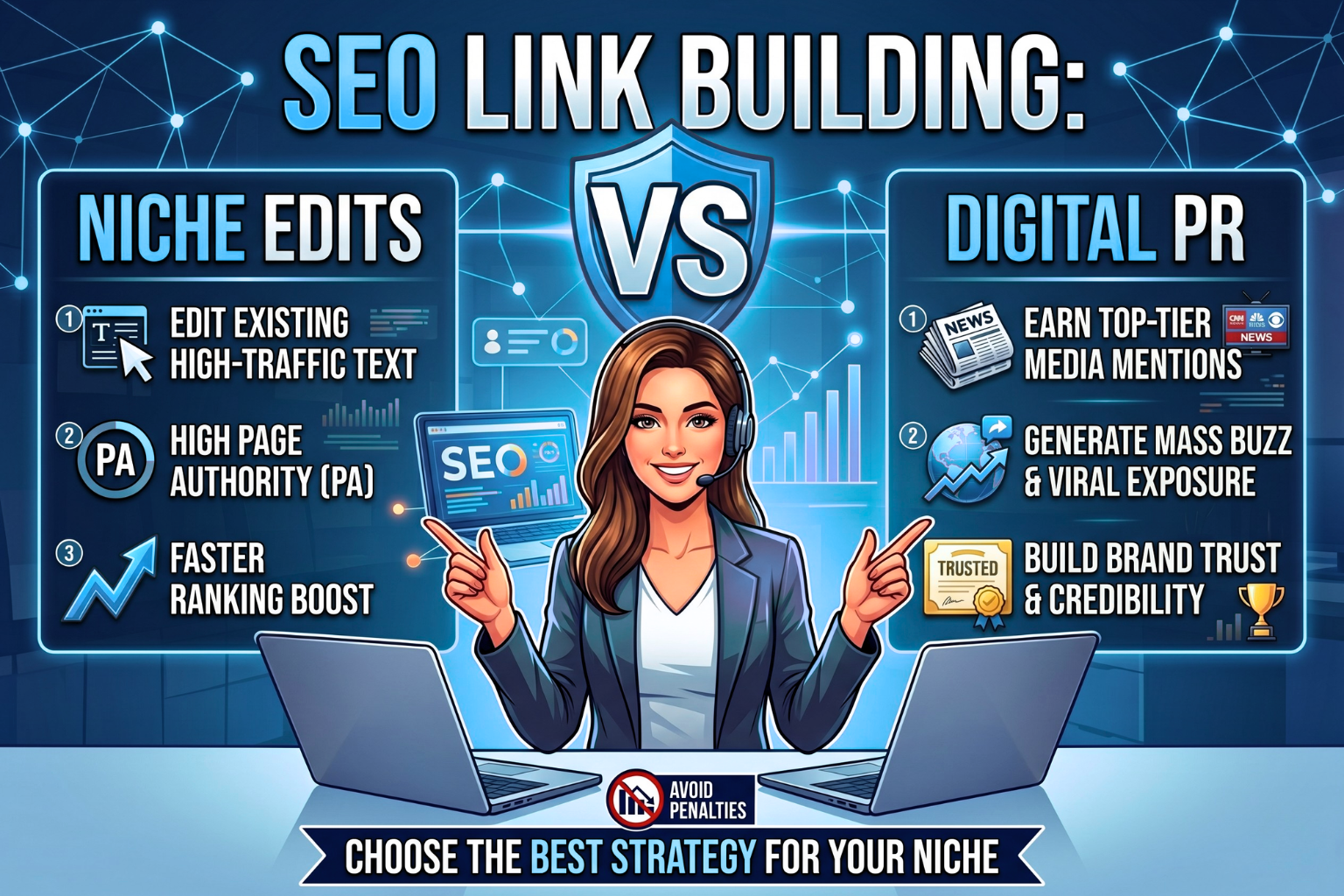
Niche edits use existing URLs, while guest posts use new URLs. Existing pages, such as aged blog posts, resource guides, and comparison articles, may already have traffic and rankings. New guest post URLs must be indexed before they can build authority.
Guest posts provide more control over content. You can choose titles, headings, content structure, and anchor text. Because niche edits use published content, they offer less control.
Guest posts also allow greater ownership of the published article. By contrast, niche edits depend on content controlled by another publisher.
Niche edits carry more risk when purchased only to influence rankings. Google considers paid links, exchanged links, and automated links to be link spam when used for manipulation.
Niche Edits vs Digital PR
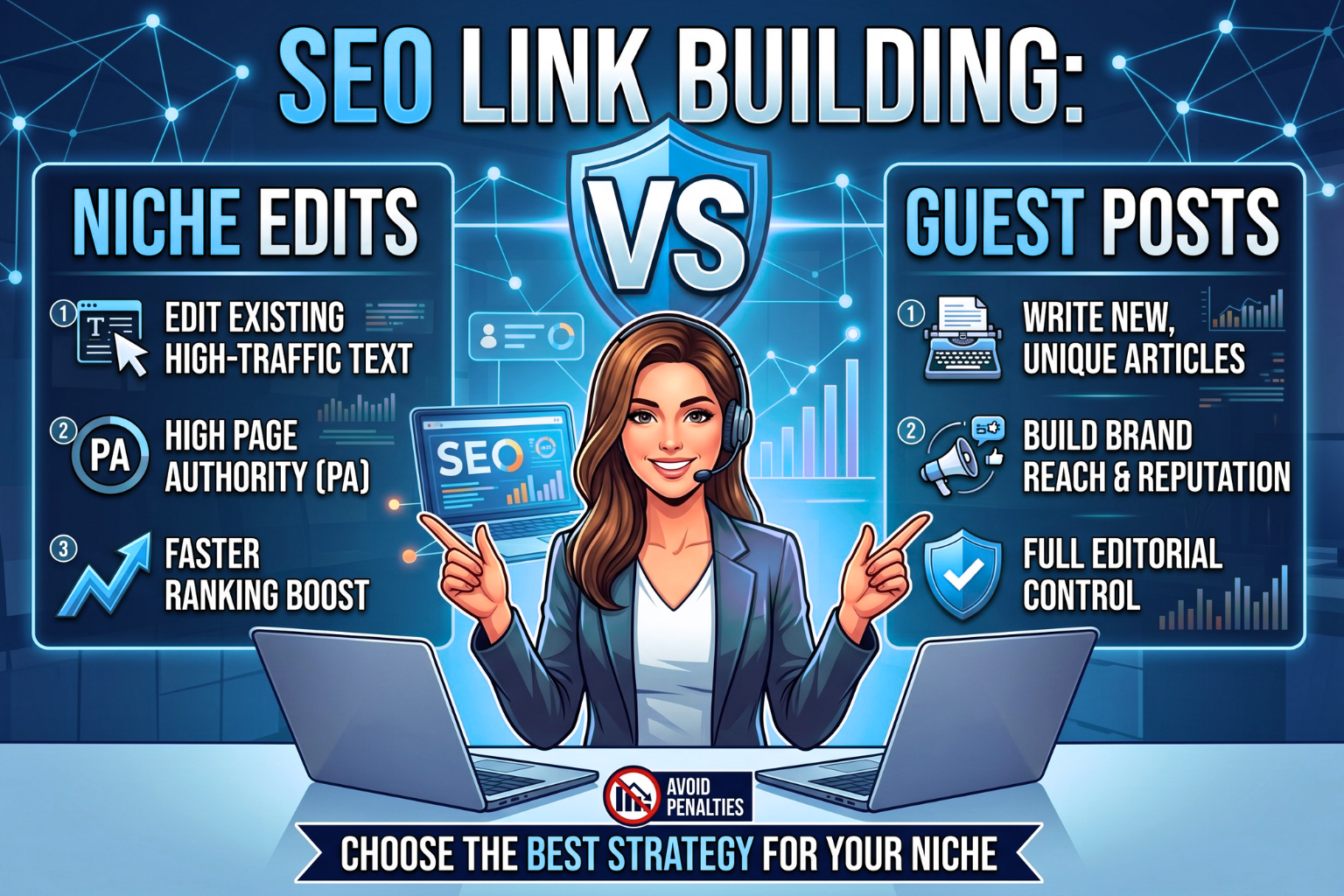
Digital PR is generally safer because links come from editorial coverage. Examples include journalist articles, industry reports, and news mentions. These links are earned through content value rather than direct placement.
Beyond backlinks, digital PR can build brand mentions, referral traffic, and press citations. Research from Backlinko found that long-form content earns 77.2% more links than shorter content.
Niche edits are usually faster to acquire because they use existing pages. Digital PR often requires campaigns involving data studies, surveys, or expert commentary.
Which Link Building Method Is Safer?
Digital PR is generally the safest option, followed by guest posts and niche edits. However, risk depends on execution and link quality.
Editorial decisions make digital PR safer because journalists, editors, and industry publications control the placement. Guest posts remain low-risk when they provide useful content and properly disclose sponsored placements.
Niche edits are safest when relevance is clear. The linking page should match the target page in topic, audience, and search intent. For example, a SaaS pricing guide can naturally link to CRM software, analytics platforms, or helpdesk tools.
Avoid niche edits from PBNs, coupon directories, and hacked websites. Skip exact-match money anchors, repeated commercial phrases, and unnatural product terms. Use branded anchors, product names, and URL anchors instead.
The safest strategy combines 3 link types. Use digital PR for authority, guest posts for topical depth, and niche edits for relevant existing pages. Track performance using Google Search Console, Ahrefs, and Semrush.
Conclusion
In conclusion, successful niche edits rely on relevance, trust, and natural placement rather than link quantity alone. Focusing on quality websites, diversified anchor text, indexed pages, and balanced backlink profiles helps reduce risk while improving long-term SEO performance.
Regular audits using tools like Ahrefs, Semrush, and Google Search Console can help identify weak links and maintain backlink quality. Combining niche edits with digital PR, guest posts, and content-led SEO creates a more resilient and sustainable link-building strategy.
Review your current backlink profile, remove low-value links, and prioritize relevant placements that strengthen authority and support long-term organic growth while applying best practices for how to build safe niche edits.
Stay Ahead in Digital Marketing
Get exclusive insights, trends, and strategies delivered straight to your inbox. Subscribe now!
Web Genie
Driving Digital Growth with Innovation & Strategy
Quick Links
Contact Info
- info@webgenie.io
- +44 7472 732550
- Office 1009 85 Dunstall Hill, Wolverhampton, United Kingdom, WV6 0SR
Social Media
© 2025 Web Genie, All Rights Reserved.