How to Choose a Web Developer: 10 Things to Check Before Hiring
Home / Blog
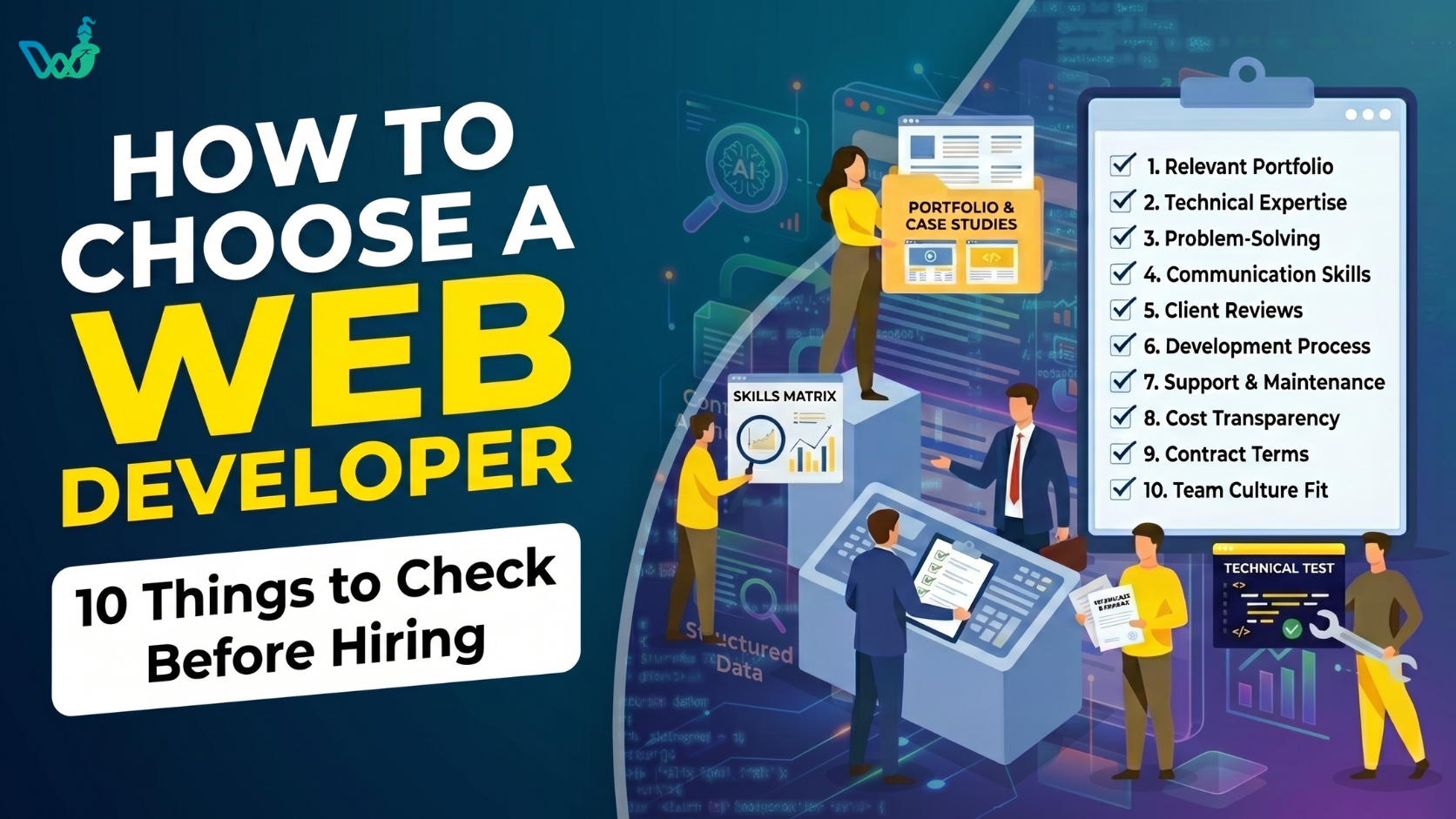
Choosing the right web developer helps you build a website that meets your business goals. A skilled developer creates websites that are functional, secure, user-friendly, and easy to maintain.
Before hiring, compare developers based on their experience, portfolio, technical skills, communication, development process, and support options. Consider factors such as website type, required features, SEO needs, performance, security, and ownership terms.
Business owners, startups, and individuals use these checks to find developers who match their project requirements. This applies to business websites, ecommerce stores, portfolios, and custom web applications.
This guide explains how to choose a web developer by covering 10 key factors, including experience, technical skills, pricing, communication, SEO knowledge, security, ownership, and post-launch support.
Decide Between a Freelancer, Agency, or In-House Developer
Choosing between a freelance web developer, web development agency, or in-house developer depends on your project needs, budget, timeline, and future plans. Each option has different costs, skills, and levels of support.
When Should You Hire a Freelancer?
A freelance web developer is a good choice for small to medium-sized projects. Freelancers can help with business websites, landing pages, portfolios, and small ecommerce stores.
They usually offer direct communication and lower costs. However, one developer may not have all the skills needed for larger projects.
If your website needs advanced coding, SEO, design, content, or regular updates, you may need more experts. Freelancers may also have limited availability during busy times.
When Is a Web Development Agency Better?
A web development agency is a better choice for large or complex websites. Agencies have teams that handle development, design, SEO, content, testing, and project management.
They work well for large ecommerce stores, custom websites, and web applications. Many agencies also provide support after the website goes live.
The main downside is cost. Agencies usually charge more because they provide a full team of professionals.
What About an In-House Developer?
An in-house developer is useful for companies that need regular website work. A full-time developer gives you more control and faster communication.
Over time, they learn your business needs and website goals. However, hiring an employee includes extra costs like salary, benefits, equipment, and software.
This option is best for companies that need continuous development instead of a one-time website project.
Which Option Should You Choose?
Choose the option that fits your needs, not just the cheapest option. Freelancers are good for smaller projects, agencies handle complex websites, and in-house developers support ongoing work.
Before hiring, check your project size, required skills, maintenance needs, and future plans.
Check Their Portfolio and Relevant Experience
A developer’s portfolio helps you understand their skills and past work. Do not choose a developer only because their websites look attractive. Check if their previous projects match your industry, features, and needs.

Look for Similar Websites
Check if the developer has built websites like the one you need. For example, an ecommerce website requires experience with product pages, payment systems, and inventory tools. A developer with similar experience can better understand your goals and solve problems faster.
Look at the platforms and tools they have used before. Examples include WordPress, Shopify, Webflow, or custom coding frameworks. This shows whether they have the right skills for your project.
Test Their Live Websites
Visit the websites in their portfolio to check their quality. Test page speed, navigation, mobile design, forms, and overall user experience. A live website gives more information than screenshots.
Check important areas such as SEO setup, website security, and accessibility. These factors affect how well the website works after launch.
Ask What They Actually Built
Ask the developer about their exact role in each project. Some developers only work on parts of a website, not the full project. Find out if they handled design, coding, integrations, testing, or complete development.
Knowing their actual work helps you judge their real skills. A long portfolio does not always mean better experience.
A good portfolio shows relevant experience, technical skills, and quality work. Choose a developer whose previous projects match your goals and website requirements.
Read Reviews, Testimonials, and Case Studies
Read reviews, testimonials, and case studies to evaluate a developer’s reliability, communication, and project results before hiring them. A portfolio shows their skills. Client feedback shows their work quality and professionalism.
Check Independent Reviews
Look for feedback on independent review platforms instead of relying only on testimonials on the developer’s website. Focus on comments about communication, deadlines, problem-solving, and post-launch support.
Reviews from clients with similar projects can show whether the developer understands your requirements. They also reveal the developer’s working process and expertise.
Look for Specific Results
Detailed testimonials provide more value than short comments like “great service” or “excellent developer.” Choose reviews that explain the work completed, challenges handled, and results achieved.
Case studies show the client’s problem, the solution provided, and the final outcome. Results may include faster website performance, improved user experience, higher conversions, stronger security, or a successful launch.
Identify Patterns Across Feedback
Compare reviews from multiple sources to find consistent patterns. A single negative review may not represent the developer’s overall performance.
Repeated complaints about missed deadlines, poor communication, unexpected costs, or limited support can indicate potential problems.
Researching previous client experiences helps you choose a developer who is technically skilled, reliable, transparent, and professional throughout the project lifecycle.
Evaluate Their Technical Skills
Choose a web developer whose technical skills match your website’s requirements and future goals. You do not need to know every programming language. Check whether the developer has experience with your required technologies.

Front-End and Back-End Development
Ask about experience with front-end technologies such as HTML, CSS, and JavaScript. Confirm they can use modern frameworks when needed.
For server-side websites, review their knowledge of back-end development, databases, APIs, and authentication systems. Check their experience with responsive design, performance optimization, and testing.
CMS and Ecommerce Experience
If you will manage the website after launch, look for experience with platforms such as WordPress, Shopify, and WooCommerce. Their skills should match your content or ecommerce needs.
For custom websites, choose a developer who recommends technologies based on your goals. They should explain why a solution fits your project.
APIs and Third-Party Integrations
Many websites connect with external services, including payment gateways, CRM systems, email marketing platforms, booking tools, and analytics services.
Confirm that the developer can build, test, and maintain these integrations. Reliable connections help your website work smoothly with other systems.
Security and Scalability
Ask how the developer handles secure logins, updates, backups, and common security risks. Good security practices protect your website and user data.
A growing business needs a website that supports more users, products, content, and features. Scalable development reduces the need for a complete rebuild.
The goal is not to hire a developer with the longest technology list. Choose someone with technical expertise that fits your website requirements.
Ask These Questions Before Hiring a Web Developer
Ask a web developer about their experience, process, pricing, and support before starting a project. Their answers show whether they match your website goals.
Experience Questions
Ask if they have built websites similar to yours. Request live examples of their previous work.
If you hire an agency, confirm who will manage your project. This helps you know who handles the development work.
Process Questions
Understand how the development process works from planning to launch. Ask about communication methods, updates, and revision handling.
A clear workflow reduces delays and confusion. Confirm the timeline and project milestones before development begins.
Technical Questions
Ask which platform or technology they recommend. A reliable developer should explain choices based on your goals, not personal preference.
Discuss mobile responsiveness, website speed, SEO, security, and future updates. These areas affect performance and maintenance needs.
Cost and Support Questions
Check what the quoted price includes before approving the project. Confirm whether design, content, integrations, hosting, testing, and launch support are covered.
Clarify how additional work is billed. Discuss payment terms, scope changes, and extra charges before development starts.
Ask about maintenance, bug fixes, security updates, and technical support after launch. Confirm which services are included or charged separately.
Clear answers help you compare developers and avoid unexpected costs during the project
Check Their SEO, Speed, Mobile, and Accessibility Knowledge
Choose a developer who understands technical SEO, website speed, mobile responsiveness, and accessibility requirements. These skills affect search visibility, user experience, and website performance.
Technical SEO
Ask if the developer understands technical SEO elements such as clean URLs, heading structures, crawlable pages, metadata, XML sitemaps, and structured data.
A skilled developer should build websites that search engines can access and understand. Ask how they handle indexation, internal linking, and SEO-friendly structures.
Website Performance
Ask how the developer improves website speed and loading performance. Common methods include image optimization, efficient code, caching, and suitable hosting.
Confirm whether they consider Core Web Vitals during development. The process should include testing and improving page performance before launch.
Mobile Experience
Ensure the developer creates websites that work across smartphones, tablets, and desktop computers. Review their previous projects on different screen sizes.
Check that buttons, menus, forms, images, and text remain easy to use on smaller screens.
Accessibility
Ask how the developer approaches website accessibility. Key practices include readable content, keyboard-friendly navigation, proper contrast, descriptive image alternatives, and accessible forms.
A professional developer should follow accessibility standards during development. These requirements should not be added only after launch.
Discuss SEO, speed, mobile, and accessibility before development begins. Fixing these issues later can increase costs and delay improvements.
Compare Pricing and Understand What’s Included
Compare web developer pricing by evaluating value, included services, and long-term costs instead of choosing only the lowest quote. Multiple proposals help you understand pricing differences and service offerings.
Don’t Choose Based Only on the Lowest Price
A low quote may reduce upfront costs. It can also include fewer features, limited support, lower-quality work, or unexpected expenses later.
Compare proposals based on experience, quality, communication, and included services. The cheapest option may not provide the best value.
Check What the Quote Includes
Request a detailed project cost breakdown before making a decision. Confirm whether design, development, content integration, SEO, hosting, domain setup, third-party integrations, testing, and launch are included.
Ask about costs for future updates, extra features, revisions, plugins, and maintenance. Clear pricing helps prevent unexpected expenses.
Understand Payment Terms
Discuss payment details before signing an agreement. Some developers require an upfront deposit with milestone payments.
Others may use different payment structures. Ensure the agreement covers payment schedules, project scope, deadlines, deliverables, and additional charges.
A detailed quote helps you compare developers and avoid payment disputes. Choose a developer who provides the right balance of quality, support, and cost.
Confirm Website Ownership Before Signing
Confirm website ownership before hiring a developer to keep control of your files, accounts, and digital assets. Clear ownership terms prevent problems after project completion.

Make Sure You Own the Important Assets
Your business should control the domain name, hosting account, website files, source code, CMS, database, analytics accounts, and Google Search Console access.
If a developer creates these accounts, ensure ownership transfers to your business. Use business-controlled email addresses for key accounts.
Request access to the website’s source code, admin accounts, backups, and documentation after launch. This allows you to change developers if needed.
Ask What Happens If You Stop Working Together
Discuss ownership terms before signing a contract. Confirm you will receive website files, account access, backups, and project assets.
Include ownership details in the agreement. A developer should not control essential accounts or limit your website access.
Clear ownership terms simplify future maintenance, redesigns, and developer changes. Address these details before development starts to avoid costly issues.
Watch for These Web Developer Red Flags
Identify web developer red flags before hiring to avoid unreliable service, unexpected costs, and project delays. A low price or big promise does not always mean a developer is the right choice.
No Relevant Portfolio
Check if the developer has completed projects similar to yours. Request relevant examples before moving forward.
Extremely Low Pricing
A quote far below other proposals may indicate limited experience, poor-quality work, or missing services. Compare included services before choosing based only on price.
Unrealistic Promises
Avoid developers who guarantee specific Google rankings, instant results, or extremely fast launches. Reliable developers provide realistic timelines and expected outcomes.
Poor Communication
Watch for slow responses, unclear answers, or difficulty explaining technical details. Poor communication can affect the project timeline and results.
No Written Scope
Ensure the agreement covers deliverables, services, deadlines, revisions, and payment terms. A clear scope prevents misunderstandings.
Unclear Additional Costs
Ask how extra features, revisions, changes, and maintenance requests are charged. Clear pricing helps avoid unexpected expenses.
No Ownership or Access
Avoid developers who restrict access to your domain, hosting, CMS, source code, or important assets. Your business should control essential website accounts.
No Post-Launch Plan
Confirm who handles updates, security fixes, bugs, backups, and maintenance after launch. A support plan keeps your website secure and functional.
One warning sign may not mean a developer is unsuitable. Multiple red flags should encourage you to compare other candidates.
How to Compare Web Developers Before Hiring
Compare web developers with a structured scoring system to evaluate experience, skills, pricing, and project fit. This helps you avoid decisions based only on cost or first impressions.
After shortlisting candidates, review each developer using key factors. Compare experience, portfolio quality, technical skills, communication, pricing, SEO knowledge, support, and ownership terms.
Score each factor from 1 to 5. Adjust category weights based on your website requirements.
An ecommerce website may prioritize ecommerce experience, payment integrations, security, and performance. Price should not be the only deciding factor.
A comparison table may include:
|
Factor |
Suggested Weight |
|
Relevant experience |
20% |
|
Portfolio quality |
15% |
|
Technical skills |
15% |
|
Communication |
10% |
|
Price and value |
15% |
|
SEO and performance |
10% |
|
Support and maintenance |
10% |
|
Ownership and contract terms |
5% |
These weights are examples. Adjust them according to your project goals.
Choose the developer who offers the best overall balance of experience, quality, communication, value, and long-term support. The highest score in every category is not always the best choice.
A structured comparison makes the hiring process more objective. It also reduces the risk of choosing a developer based only on the cheapest quote.
Final Checklist Before Hiring a Web Developer
Use this checklist before hiring a web developer to confirm your goals, budget, ownership, and project expectations. It helps you avoid missing important details before development starts.
- ☐ Define your website goals and required features
- ☐ Choose between a freelancer, agency, or in-house developer
- ☐ Review relevant portfolio projects
- ☐ Check client reviews and testimonials
- ☐ Evaluate technical skills and experience
- ☐ Ask key development process questions
- ☐ Discuss SEO, speed, mobile performance, security, and testing
- ☐ Compare quotes, pricing, and payment terms
- ☐ Confirm website ownership, source-code access, and account control
- ☐ Discuss maintenance, updates, and post-launch support
- ☐ Identify potential risks and red flags
- ☐ Agree on project scope, deadlines, revisions, and responsibilities
- ☐ Sign a clear agreement before development begins
Choose a developer who understands your goals and meets your project requirements. This creates a stronger foundation for a successful website project.
FAQs
How do I know if a web developer is good?
A good web developer has relevant experience, a strong portfolio, clear communication, and a reliable process. They should understand your goals and explain technical decisions clearly.
How much does it cost to hire a web developer?
The cost depends on project size, features, technology, design needs, and experience. Simple websites usually cost less than custom ecommerce platforms or web applications.
Should I hire a freelancer or a web development agency?
Freelancers often suit smaller projects. Agencies are better for larger websites needing multiple skills and ongoing support. Choose based on budget, scope, and future needs.
What should I ask a web developer before hiring?
Ask about experience, portfolio, process, timeline, pricing, communication, revisions, SEO knowledge, maintenance, and ownership terms.
How long does it take to build a website?
The timeline depends on complexity, features, and revisions. Basic websites may take a few weeks. Ecommerce websites and custom applications can take several months.
Should a web developer also handle SEO?
Developers should understand technical SEO basics, including site structure, mobile responsiveness, speed, and crawlability. SEO specialists usually handle keywords, content strategy, and link building.
Who should own my website and source code?
Your business should confirm ownership of the domain, website files, source code, hosting, CMS, and accounts in writing. Clear terms help prevent future issues.
Conclusion
In conclusion, knowing How to Choose a Web Developer makes it easier to select the right professional for your website goals and business requirements. A reliable developer should bring relevant experience, strong technical skills, clear communication, an organized development process, and expertise in areas such as technical SEO, website performance, security, user experience, and scalability.
Before hiring, take time to review portfolios, read client feedback, compare services, confirm ownership details, and discuss post-launch support. These steps help you avoid unnecessary costs and choose a developer who can create a secure, fast, and effective website that supports your business growth.
Ready to build a website that fits your business needs? Contact Web Genie today to discuss your project requirements and get professional web development support from an experienced team.
Stay Ahead in Digital Marketing
Get exclusive insights, trends, and strategies delivered straight to your inbox. Subscribe now!
Web Genie
Driving Digital Growth with Innovation & Strategy
Quick Links
Contact Info
- info@webgenie.io
- +44 7472 732550
- Office 1009 85 Dunstall Hill, Wolverhampton, United Kingdom, WV6 0SR
Social Media
© 2025 Web Genie, All Rights Reserved.