What Is Link Building in SEO? Complete Guide by Web Genie (2026)
Home / Blog
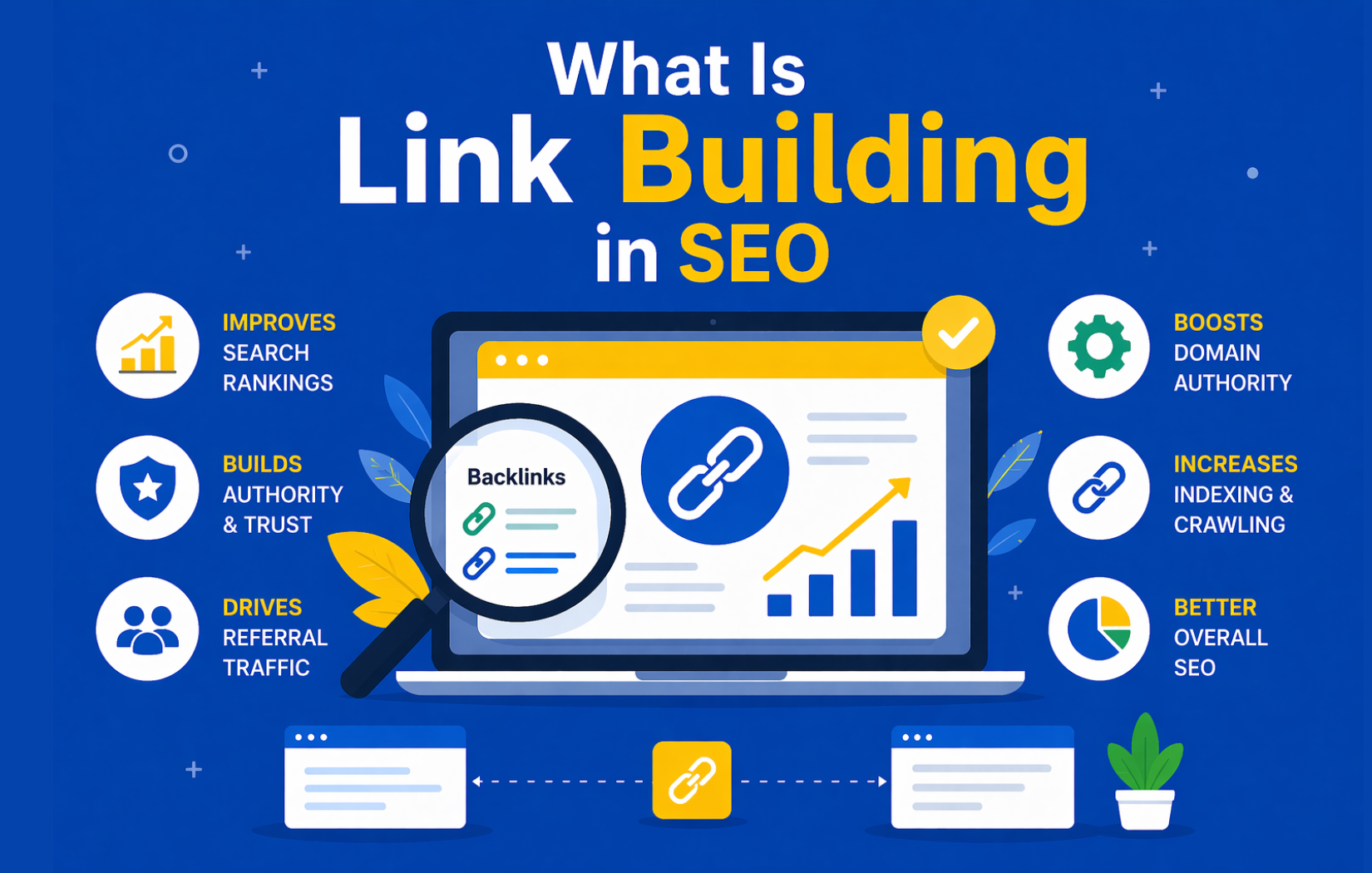
Link building in SEO is the process of getting links from other websites to your own. These links, known as backlinks, help search engines understand your website’s credibility, relevance, and authority. The more high-quality backlinks you earn, the better your chances of ranking higher in search results.
It works by passing trust signals from one site to another. Search engines evaluate link quality, relevance, anchor text, and domain authority to decide rankings. Marketers, businesses, and website owners use link building to increase visibility, drive traffic, and grow their online presence.
In this guide, you will learn what link building is, how backlinks work, the different types of links, and the best strategies to build them effectively.
What Are Backlinks?
Backlinks are the links between web pages. When another site links to your page, that link is referred to as a backlink to your site.
Why Backlinks Matter
-
You may consider that backlinks are online votes of confidence.
-
Once another site links to your content, it indicates that your page is of some value.
-
This is the reason why building backlinks is a big deal in SEO.
-
Backlinks are usually considered as one of the most important Google ranking signals by the search engines.
Types of Links
-
Links are also of different types.
-
External links: links that originate in other websites.
-
Internal links: linking between pages within your own website.
Key Insight
-
Both are important.
-
External websites' backlinks tend to be more influential regarding authority and positioning.
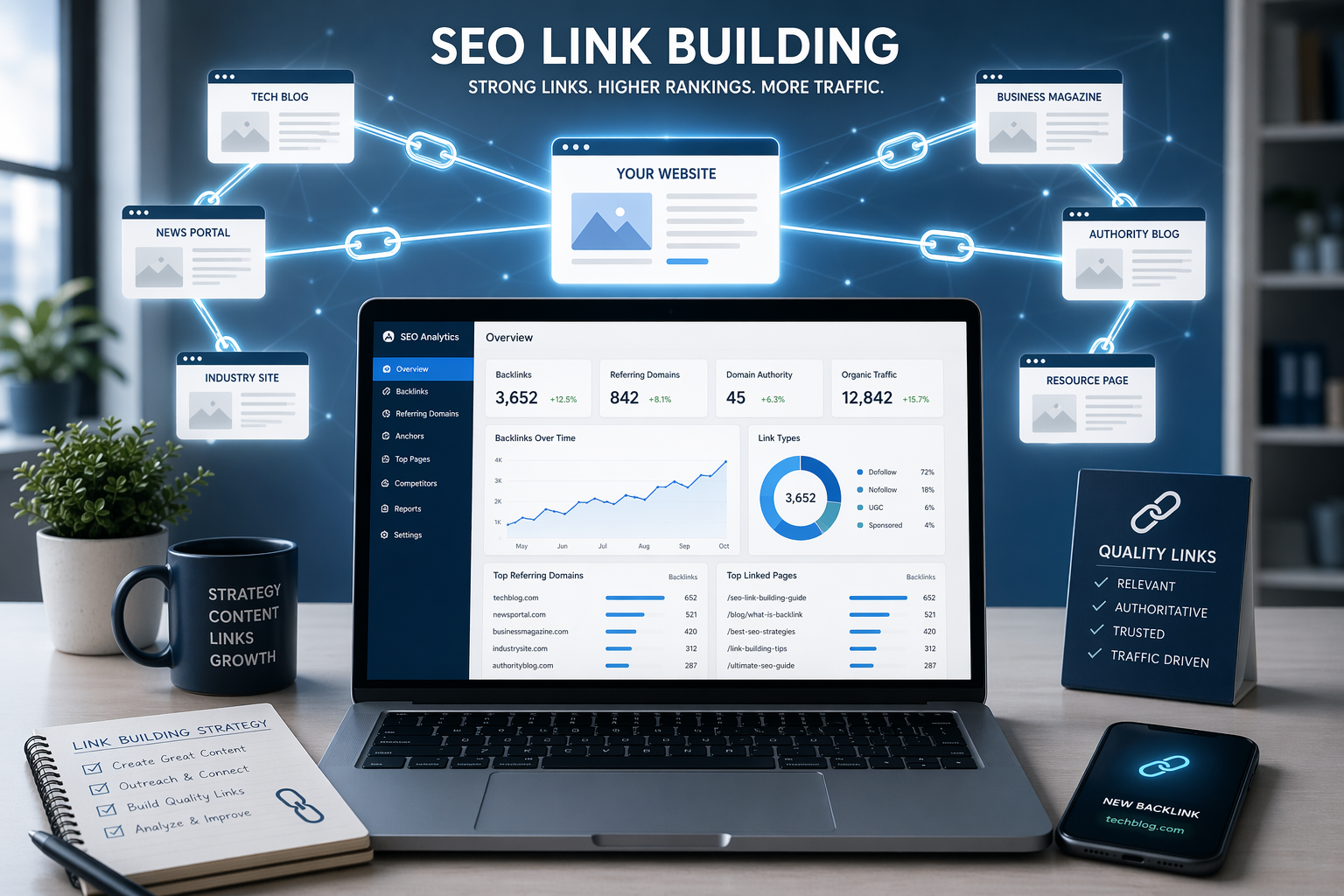
What is Link Building?
The link building meaning is quite easy: it is the act of receiving hyperlinks on other sites to the one you have.
How It Works
-
These hyperlinks make the user move between one page to the other.
-
They also assist the search engines in assessing the quality and credibility of your content.
Modern SEO Approach
-
The concept of link building in modern SEO does not consist in gathering links at any cost.
-
It is all about obtaining relevant, useful, trustworthy links through effective link building strategies.
-
Links should come from websites that are relevant to your subject matter or industry.
Why Link Building Matters for SEO
Improves Search Engine Rankings
The importance of link building in SEO has a number of reasons. To start with, it helps improve rankings. Search engines use links to determine a page's value and reliability. Strongly backlinked pages tend to rank higher than those with no links. This is because backlinks are trust signals that help boost your site's overall search engine authority.
Builds Domain Authority
Second, link building assists in building domain authority. Although it’s a metric that in itself is third-party, the overall concept can be helpful: the more powerful backlinks a site has, the more authority it tends to gain in the long run.
Drives Referral Traffic
Third, links are able to refer immediate visitors to your site. This is referred to as referral traffic. When your page is linked to a well-known blog, news site, or industry page, real people can visit your page through that link.
Helps Google Discover Content
Lastly, links assist search engines in finding your pages. Linking is good because it enhances crawlability, where Google will find and index your content easily.
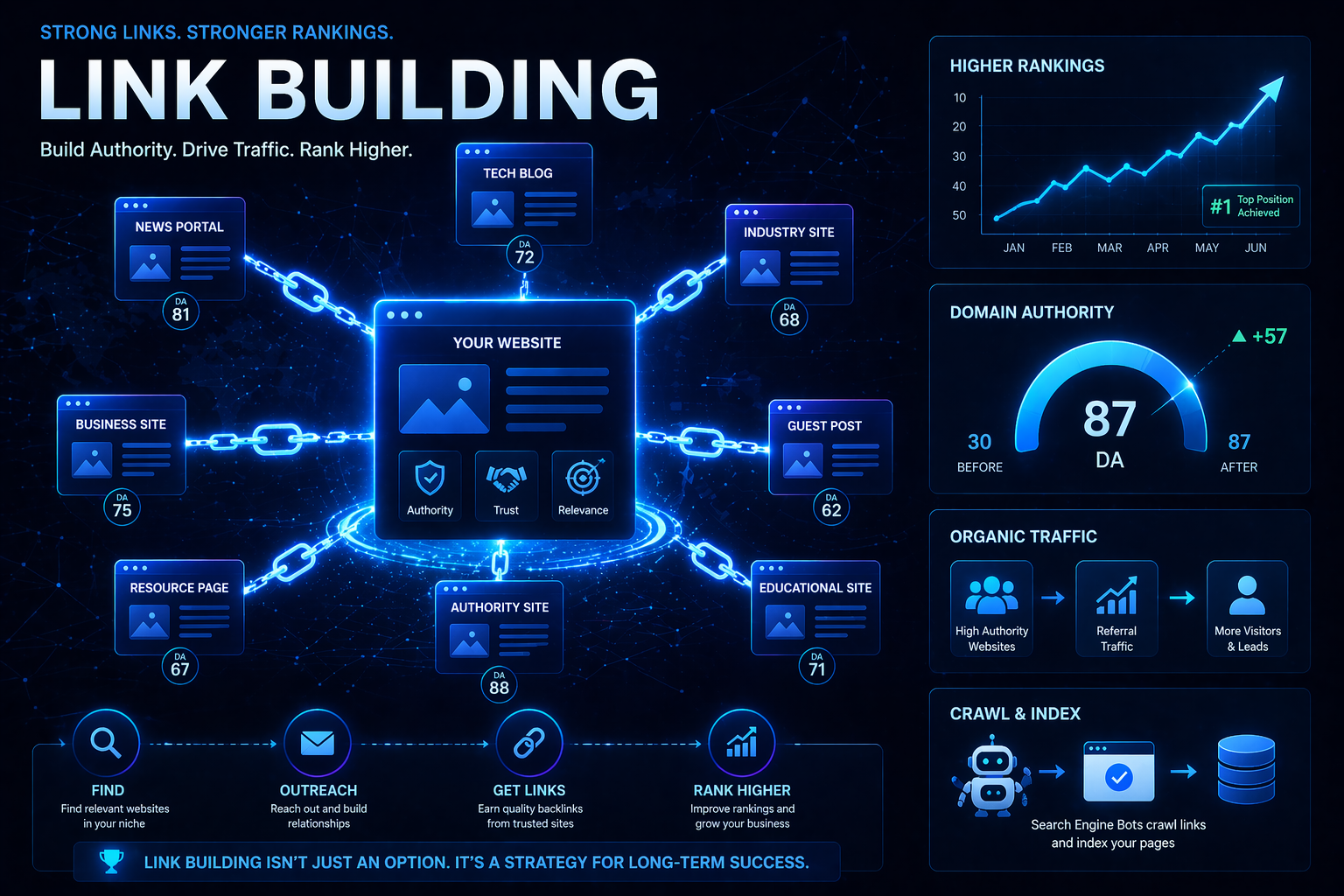
How Search Engines Use Links
Search engines use links to evaluate websites. Not all links are treated the same way by search engines. They observe the quality, relevancy and context of each link.
Link Quality & Relevance
-
A backlink on a reputable site within your niche is more powerful.
-
A backlink on a site that is not relevant or of low quality is less effective.
Anchor Text
-
Search engines also observe anchor text.
-
Anchor text is the text that is clicked in a hyperlink.
-
Proper anchor text helps search engines understand the content of the page it links to.
-
Exact-match anchor text should not be overused, as it may sound unnatural.
Contextual & Editorial Links
-
Contextual links are included within the body of the content in a natural way.
-
They are not located in footers or sidebars.
-
Editorial links are particularly effective.
Types of Links in SEO
There are two main types of links in SEO: internal and external.
Internal Links:
Internal linking refers to the process where one page of your site links to another page on your site. This assists users in orienting through your site, and it assists search engines to comprehend the outline of your information. It also distributes the link equity on your pages.
External Links:
In the backlinks, external links are those directed towards your site. These are the connections that can be used to develop authority and rankings. An effective SEO strategy should consist of internal and external links.
Dofollow link vs Nofollow Link
The other significant aspect of link building fundamentals is the knowledge of dofollow and nofollow links.
Dofollow links are regular links which enable the search engines to transfer link equity between two pages. These are the links that tend to be beneficial to the SEO as they can be more effective in supporting the rankings.
Nofollow links have a tag that informs the search engines that they should not pass on the same authority. They are able to generate referral traffic, create brand awareness, and cause your backlink profile to appear natural.
Link Building vs Link Earning
Link Building:
These terms are interchangeably used by many people but they differ slightly. Conventional backlink building typically implies actively attempting to obtain links via outreach, guest posting, business directories, partnerships or PR.
Link Earning:
It is more natural to earn links. It occurs when your content is so useful, original or insightful that other websites will automatically link to it. In the case of a detailed guide, a useful tool, or original research, natural editorial links may be generated.
Is Link Building Still Relevant in 2026?
Yes, absolutely. Link building remains a very topical SEO topic in 2026 due to the fact that links are a key indicator of authority, relevance, and trust. Nowadays, search engines are more about quality than quantity.
Spammy links, paid link programs, and irrelevant backlinks are dangerous and, most of the time, ineffective. Relevance, authenticity, and useful content are the new day SEO rewards. So yes, what is link building still matters a lot, but only when done the right way.
Common Link Building Mistakes to Avoid
-
The first mistake is the pursuit of a significant amount of cheap backlinks as opposed to quality.
-
The other one is the creation of links with irrelevant websites simply because they are accessible.
-
Another problem is using exact-match anchor text.
-
It may render your profile of links unnatural.
-
Internal linking should also be considered.
-
It is essential for structure, navigation, and the transfer of link equity throughout your site.
When Should Businesses Invest in Link Building?
Businesses should invest in link building when they seek long-term growth through SEO. Link building is worth it if your site contains good content but isn't well seen, you are in a competitive business, or you're interested in establishing authority in your niche.
For new sites, the initial steps of creating good content and implementing internal linking are relevant. For growing businesses, category pages, blog posts, and service pages can be enhanced over time through SEO link building.
Why Web Genie Offers the Best Professional Link Building Services
At Web Genie, we focus on building high-quality, relevant backlinks through real outreach and strong industry relationships. Instead of chasing quantity, our approach prioritizes contextual and editorial links from authoritative websites that truly improve your search rankings.
Our team combines strategic content placement with white-hat SEO practices to ensure every link adds long-term value to your brand. We do not rely on shortcuts or spammy tactics. Instead, we build links that are safe, natural, and aligned with Google’s guidelines.
Unlike many services that promise hundreds of backlinks in a short time, Web Genie believes in sustainable SEO growth. Real results take time, and that is exactly what we deliver.
Conclusion
In conclusion, link building is an important part of SEO that helps websites rank higher and attract more traffic. Getting links from trusted and relevant websites shows search engines that your content is valuable and reliable. By focusing on quality links and using the right types of backlinks, you can build a strong and natural online presence over time.
Want to grow your website with high-quality backlinks? Explore Web Genie’s professional link building services today.
Stay Ahead in Digital Marketing
Get exclusive insights, trends, and strategies delivered straight to your inbox. Subscribe now!
Web Genie
Driving Digital Growth with Innovation & Strategy
Quick Links
Contact Info
- info@webgenie.io
- +44 7472 732550
- Office 1009 85 Dunstall Hill, Wolverhampton, United Kingdom, WV6 0SR
Social Media
© 2025 Web Genie, All Rights Reserved.