Link Building Strategies That Work in 2026 (White-Hat & Scalable)
Home / Blog
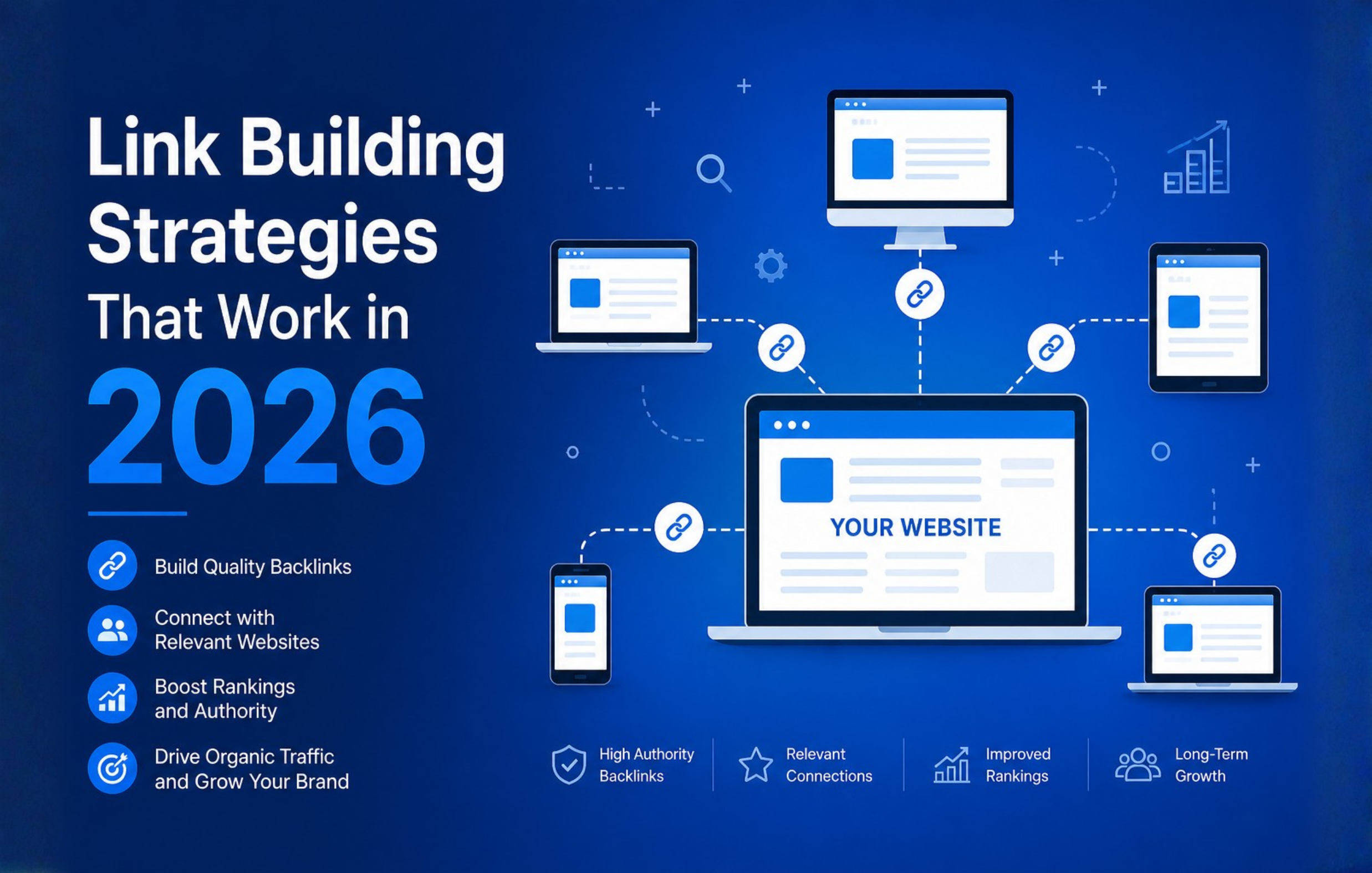
Over 90% of web pages get no organic traffic from Google.
Despite building backlinks, many websites still fail to rank. In most cases, the issue is not the number of links but their relevance and quality.
Low-value or irrelevant links do not build authority, drive traffic, or support real growth. In some situations, they can even cause ranking drops after algorithm updates.
A better approach is a structured white-hat link building strategy focused on relevance and user value.
In this guide, you will learn proven link building strategies, content-led methods, outreach tactics, and safe practices to improve rankings, increase traffic, and achieve long-term SEO growth.
What Makes a Link Building Strategy Effective?
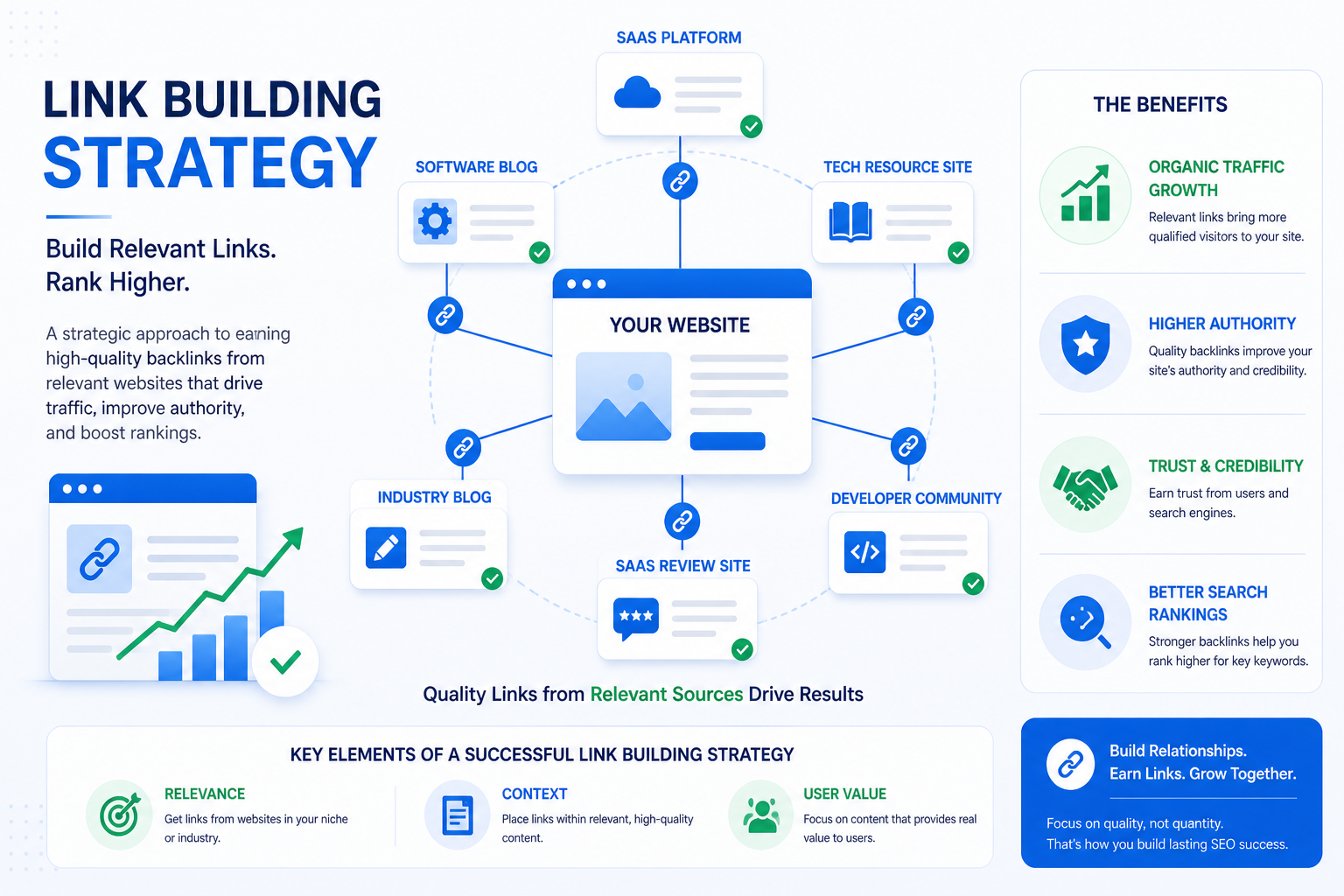
An effective link building strategy focuses on relevance, context, and user value, not just domain authority.
A high-quality backlink comes from a relevant website and is placed naturally within useful, in-content material. It should support the topic and provide clear value to readers.
For example, a SaaS company gains more SEO value from a software review blog than from a food blog. This happens because contextual relevance directly influences rankings.
Strong backlinks typically improve:
- Topical authority
- Organic traffic growth
- E-E-A-T signals (Experience, Expertise, Authority, Trust)
- Brand trust and credibility
- Referral traffic
- Search visibility
Effective strategies also depend on link placement, link type, and consistency. Prioritize editorial, in-content links over sidebar or footer links, as they pass more value.
Maintain a steady link growth pattern instead of sudden spikes. This helps build a natural backlink profile.
Balance follow and nofollow links to create a diverse and safe link profile.
Focus on earning links that are relevant, useful, and naturally placed. These links deliver long-term SEO value and sustainable growth.
1. Editorial & Contextual Link Building
Editorial links are naturally earned backlinks placed within relevant content because they provide value.
These links appear when other websites cite your content as a source. They are strong because they are based on relevance, trust, and editorial intent.
For example, a marketing blog may reference your data, research, guide, or case study to support its content. Since your content adds value, the link is placed naturally within the article.
Editorial links are contextual links, meaning they appear inside the main content rather than in sidebars or footers. This placement increases their SEO value.
These links also strengthen E-E-A-T signals and pass more authority because they come from trusted, relevant content.
You can earn editorial links by creating:
- Data-driven content
- Detailed guides
- Templates and tools
- Comparison articles
- Original research
Focus on creating content that others want to cite, reference, or use. This helps you earn high-authority backlinks and build long-term SEO growth.
2. Guest Posting Done the Right Way
Guest posting delivers results when the focus stays on relevance, quality, and real audience value, not just backlinks.
On the other hand, poor guest posting usually involves publishing low-quality articles on irrelevant or spammy websites. This kind of approach can damage your reputation and bring little to no SEO benefit.
A better strategy is to create useful, high-quality content for websites your target audience already trusts. Look for sites that are relevant, credible, and follow strong editorial standards.
For example, an SEO software company can publish an article about technical SEO mistakes on a digital marketing blog. This keeps the topic aligned and reaches the right audience.
When adding links, place them naturally within the content using contextual, relevant anchor text. Avoid forcing links or over-optimizing them.
At the same time, maintain a balanced backlink profile by using a mix of DoFollow and NoFollow links.
Focus on quality over quantity. A few strong links from relevant sites are more valuable than many low-quality links.
Build long-term relationships with relevant websites to create consistent and repeat link opportunities.
3. Link Insertions or Niche Edits
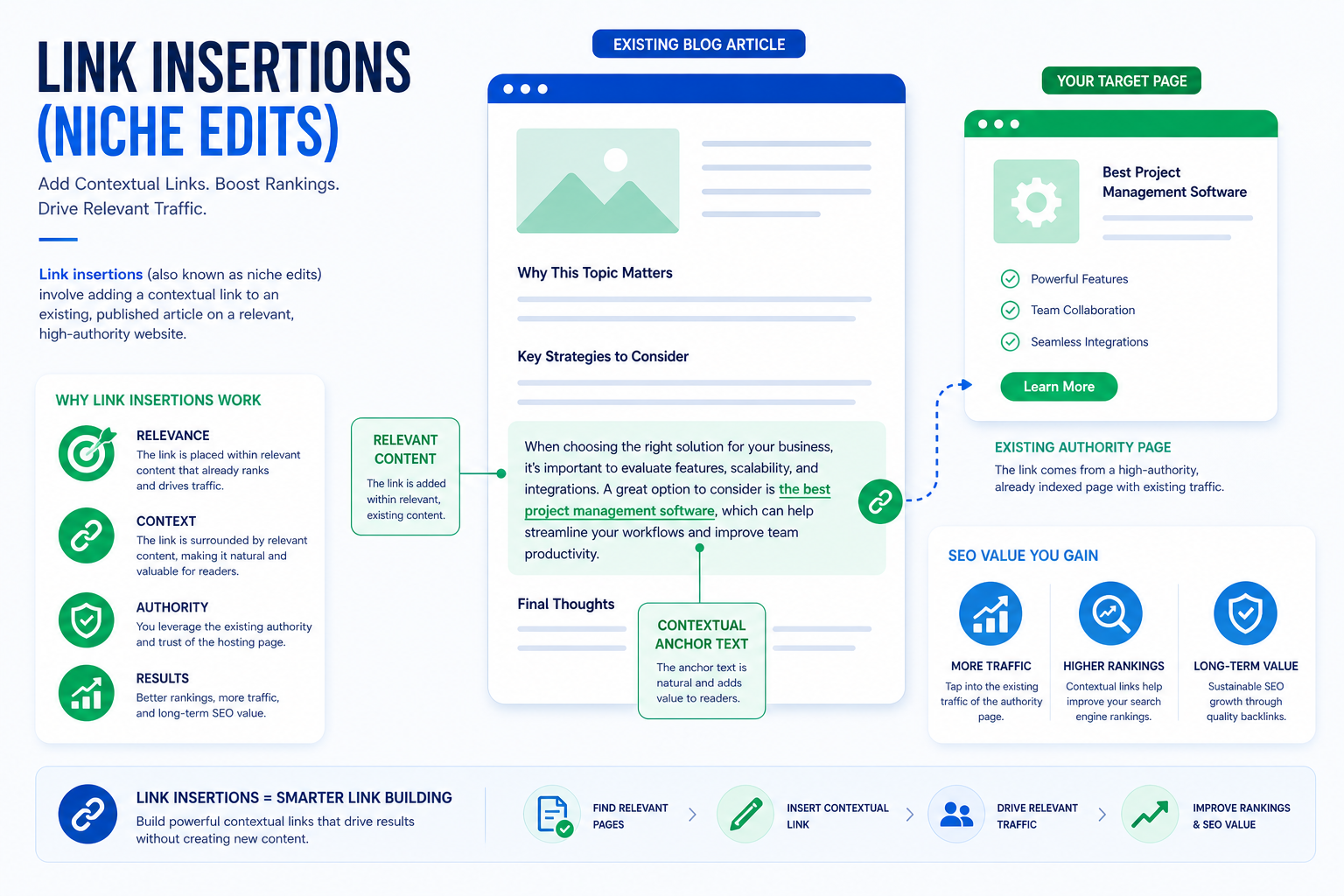
Link inserts, also known as niche edits, involve adding your link to an existing, relevant article.
This approach works best on pages that already have authority, rankings, and steady traffic. In those cases, your link should align with the topic and add clear value for readers.
For example, a page about SEO audits can include a link to your SEO audit checklist if it enhances the content and improves the user experience.
When placing links, add them naturally within the main content using contextual anchor text. Forced or irrelevant placements should be avoided.
Instead of targeting random pages, focus on those that are already indexed, ranking, and generating traffic. These links often produce faster SEO results.
Another key point is to prioritize editorial placements, where your link is added naturally with proper approval.
Paid or manipulative inserts on low-quality sites carry higher SEO risk and should be avoided.
4. Digital PR & Brand Mentions
Digital PR is a white-hat link building strategy focused on earning links through newsworthy content.
Rather than placing links manually, this approach relies on creating stories that journalists, bloggers, and industry websites want to cover.
Common Digital PR content formats include:
- original research
- Surveys
- Expert opinions
- Data studies
- Trend reports
- Industry commentary
For example, a bank can publish a report on how millennials save money in 2026. If media outlets pick up the story, the brand earns editorial backlinks and mentions.
As a result, these links often come from high-authority news sites, which improves trust, visibility, and E-E-A-T signals.
The focus stays on link earning instead of manual placement. Even when links are nofollow, brand mentions still contribute to SEO value.
To get results, campaigns depend heavily on content distribution and journalist outreach. This includes pitching stories to relevant publications.
With the right execution, Digital PR campaigns can scale and gain viral coverage, leading to multiple backlinks from different sources.
Although traditional HARO declined after its acquisition in 2024, journalist platforms and press outreach continue to work well for earning media coverage.
5. Broken Link Building
Broken link building involves finding broken links on relevant websites and replacing them with your content.
The strategy works because it offers clear value. Site owners get to fix outdated or dead links, and you gain a backlink in return.
To get the best results, focus on pages that are relevant, indexed, and already receiving traffic. This increases the overall SEO impact of the link.
For example, a blog might link to an outdated SEO checklist. If you have an updated version, you can reach out to the site owner and suggest your page as a replacement.
Before pitching, make sure your content matches the original topic and improves the resource. A natural placement within the content will deliver better results.
Since the process can be applied across different websites, this method works well as a scalable link building strategy.
6. Resource Page & SaaS Links
Resource page links come from curated pages that list useful tools, services, or educational content.
These links are effective because they are chosen editorially and built to help users find valuable resources.
They are especially effective for SaaS companies, service businesses, educational platforms, and local businesses.
For example, an accounting software company can target pages like “best accounting software for small businesses” or “small business finance tools”.
To improve results, focus on pages that are relevant, indexed, and already receiving traffic. This increases the overall value of the backlink.
When reaching out, keep your message clear and concise. Explain what your product does, who it helps, and why it should be included.
At the same time, make sure your resource provides real value. Low-quality directories that accept every submission without review should be avoided.
As you scale, look for multiple relevant resource pages within your niche and target them consistently.
7. Local Link Building Methods
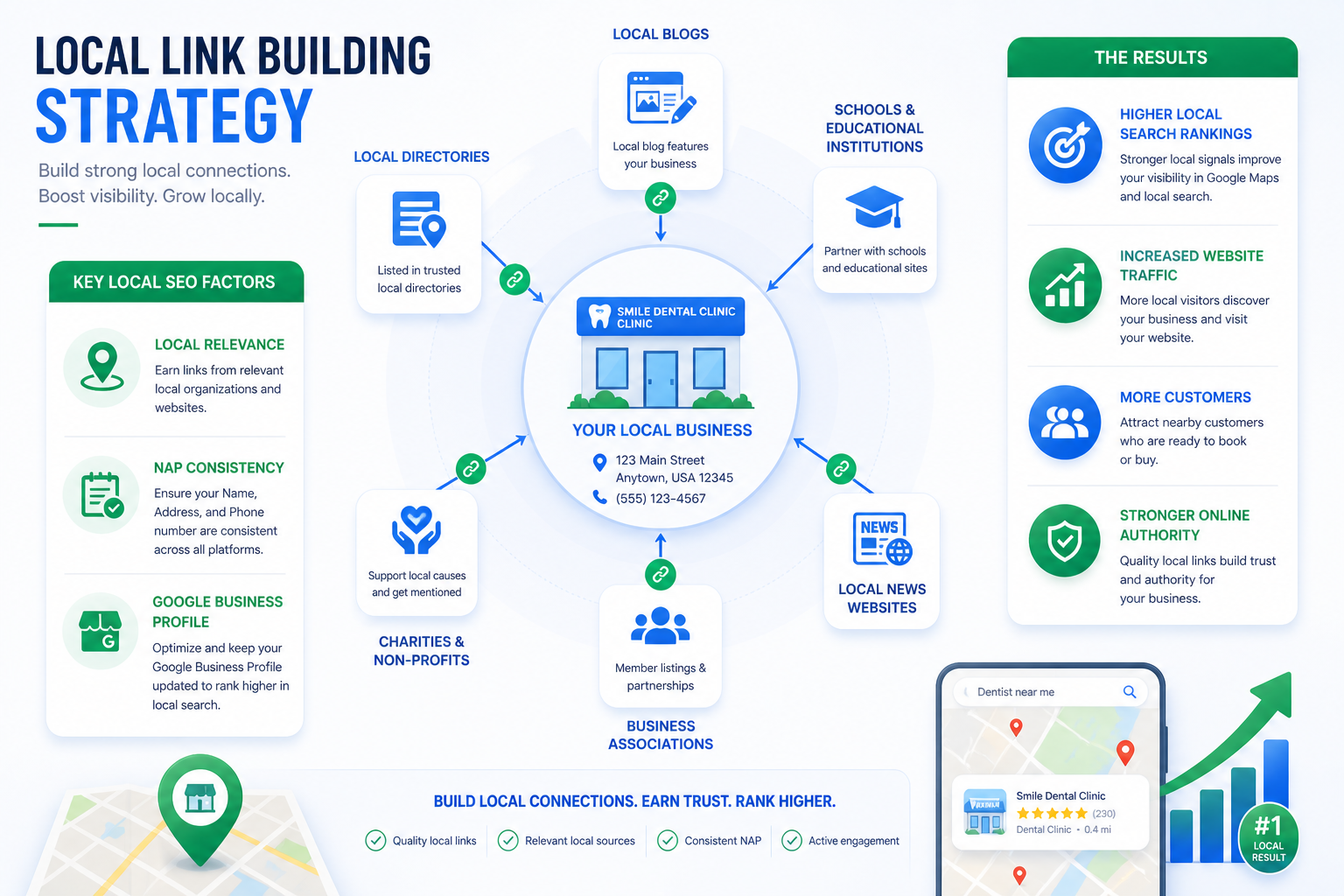
Local link building focuses on earning backlinks from geographically relevant websites to improve local search visibility.
Typically, these links come from sources such as local directories, blogs, business associations, schools, charities, and community websites.
While local directories often act as citations that include your business details (Name, Address, Phone), backlinks pass SEO authority. Both play a role in supporting local rankings.
For example, a dental clinic can sponsor a school event and earn a link from the school website. In another case, a restaurant may be featured on a local food blog. Similarly, a lawyer can share tips with a local business organization.
Even though these links may come from smaller sites, they carry strong value due to local relevance and trust signals. This is especially true for domains like .edu or .org.
Alongside link building, consistent NAP details and a well-optimized Google Business Profile help strengthen local SEO performance.
To get better results, focus on earning links from multiple local sources connected to your audience. Over time, this improves local rankings, credibility, and visibility.
8. Content-Led Link Building or Link Earning
Content-led link building focuses on earning backlinks by creating high-value content that others want to reference.
At its core, this approach works by producing linkable assets that attract links naturally because of their usefulness or uniqueness.
Common linkable content formats include:
- Original statistics
- Calculators
- Templates
- Industry reports
- Visual guides
- Free tools
- Comparison pages
- Expert roundups
For example, a real estate website can create a tax calculator. In another case, a security firm might publish a small business security checklist. A health company can also offer a meal plan template.
Most people link to content that provides clear utility, reliable data, or supporting evidence. This strengthens E-E-A-T signals, including expertise and trust.
To improve performance, match your content with search intent and maintain strong depth, accuracy, and originality. Include unique insights, updated data, and input from experts.
Alongside this, focus on creating evergreen content that continues to attract links over time. At the same time, build linkable assets designed for targeted campaigns.
Another effective method is the skyscraper technique, where you improve existing content. This can include better structure, clearer explanations, stronger visuals, and more reliable data.
Even the best content needs promotion. Distribute it through outreach, partnerships, and other channels to increase visibility.
9. Internal Linking for Seo
Internal linking connects related pages and helps distribute link equity across your website.
As pages earn backlinks, that value flows through internal links to other important pages. This directly improves their ability to rank.
For stronger impact, place links within the content using relevant anchor text. Contextual links tend to carry more SEO value than those in menus or footers.
For example, this article can link to Link Building Services, SEO Services, What Is Link Building, and How to Do Link Building for SEO.
In most cases, adding 2 to 5 internal links per page works well when they are relevant. Focus on linking to key pages and conversion-focused pages.
From a technical perspective, internal linking improves crawlability and helps search engines understand your site structure. It also prevents orphan pages.
Another advantage is stronger topical clusters, created by connecting related content within the same subject area.
10. Tactics to Avoid
Avoid link building tactics that focus on manipulation instead of value, as they can harm rankings.
Some common risky practices include:
- Buying cheap bulk links
- Private Blog Networks (PBNs)
- Spammy directory submissions
- Irrelevant guest posts
- Automated backlink tools
- Comment spam, overuse of exact-match anchor text
- Hacked or low-quality backlinks
While these tactics may bring short-term gains, they often lead to Google penalties or ranking drops. This is especially true after link spam updates.
Search engines look at link quality, relevance, and natural patterns when evaluating backlinks. Manipulative links can reduce trust and weaken your overall backlink profile.
To stay on the safe side, maintain a balanced link profile by combining different link types and focusing on steady, natural growth.
For long-term success, focus on white-hat link building strategies that prioritize relevance, authority, and user value. Although these methods take more time, they deliver safer and more sustainable results.
How Link Building Fits Into Holistic SEO
Link building supports SEO by improving authority, relevance, and rankings, but it works best within a complete strategy.
SEO also depends on high-quality content, technical performance, user experience, keyword targeting, and search intent alignment.
Backlinks signal authority, while content ensures relevance and intent match. Technical SEO supports crawlability and indexing.
For best results, combine these elements. Links build authority, content drives engagement, and technical SEO maintains performance.
This combination strengthens E-E-A-T signals (Experience, Expertise, Authority, Trust), which are critical for long-term rankings.
Use link building to support your overall SEO system, not replace it. This leads to more stable and sustainable results.
When to Use Professional Link Building Services
Use professional link building services when you lack the time, expertise, or resources to manage campaigns effectively.
In-house link building involves prospecting, content creation, outreach, follow-ups, link evaluation, and performance tracking.
As a result, it can take several hours each week and slow down other marketing efforts.
Outsourcing works well when you need scalable link acquisition, faster execution, or access to established outreach networks.
Unlike in-house work, which requires ongoing time and hiring, outsourcing offers better efficiency and more predictable costs.
Most professional services focus on relevance, quality, and safe link placement, helping reduce risk and improve results.
Choose this option if you want steady growth without managing the full process internally.
Conclusion
In conclusion, effective Link Building Strategies in 2026 rely on relevance, authority, and consistent execution, not just volume.
Strong results come from earning links through valuable content, editorial placements, digital PR, and targeted outreach.
When used properly, guest posting, niche edits, resource links, and broken link building perform best when they match search intent and deliver real value.
At the same time, internal linking, local relevance, and content-led strategies strengthen authority and improve overall SEO performance.
For long-term success, focus on trust, natural link growth, and avoiding manipulative tactics.
Apply these strategies consistently, build relationships with relevant sites, and prioritize quality to create a backlink profile that drives sustainable rankings and real business results.
Stay Ahead in Digital Marketing
Get exclusive insights, trends, and strategies delivered straight to your inbox. Subscribe now!
Web Genie
Driving Digital Growth with Innovation & Strategy
Quick Links
Contact Info
- info@webgenie.io
- +44 7472 732550
- Office 1009 85 Dunstall Hill, Wolverhampton, United Kingdom, WV6 0SR
Social Media
© 2025 Web Genie, All Rights Reserved.