How to Do Link Building for SEO (Step-by-Step Process That Works in 2026)
Home / Blog
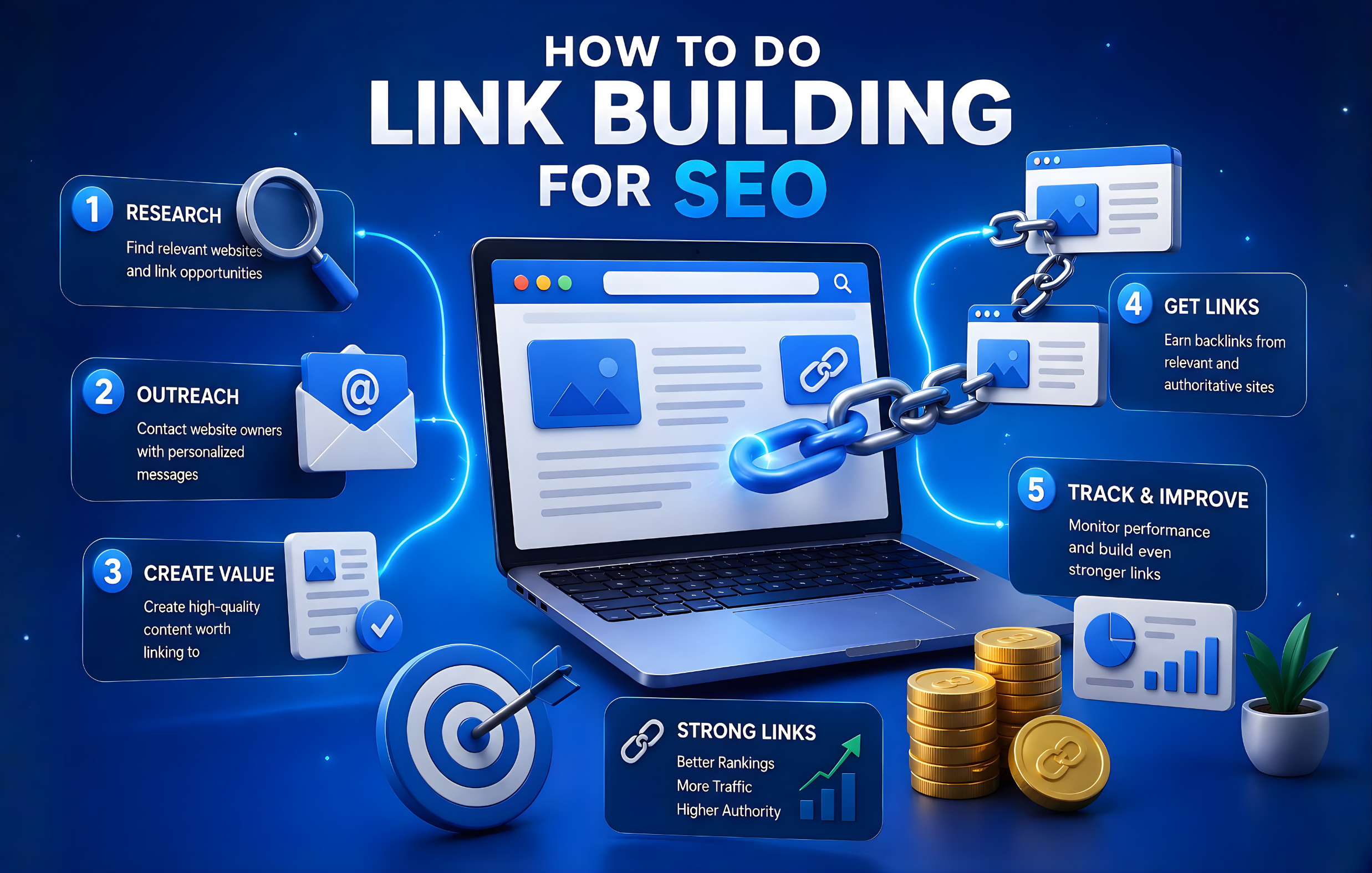
You searched how to do link building for SEO because your rankings are not improving. You may have tried guest posts, directories, or random backlinks without results. Traffic stays low, and rankings do not improve.
Outdated methods ignore relevance, quality, and intent. Backlinko reports top-ranking pages have 3.8x more backlinks than lower-ranking pages. Poor links send weak signals, while competitors build stronger authority.
This guide shows how to build high-quality backlinks step by step in 2026. You will learn audience research, competitor analysis, content creation, and outreach strategies. Each step focuses on links that improve rankings and drive targeted traffic.
Step 1: Understand Your Niche, Audience, and Search Intent
You must define your target before building links, as it determines who to reach, what content to create, and where to earn backlinks.
Identify your niche using 3 factors: industry, topics, and competitors, such as SaaS tools, fitness blogs, and crypto platforms.
Audience analysis depends on 3 data points: demographics, behavior, and preferences, including age groups, device usage, and content formats.
A study by Backlinko shows topically relevant pages earn up to 2.5x more backlinks, which confirms that links from related sites and useful content carry higher SEO value.
Step 2: Set Clear Link Building Goals
Many businesses start on linking without determining what success is. That will result in time wastage. It is best to make your goal a decision first.
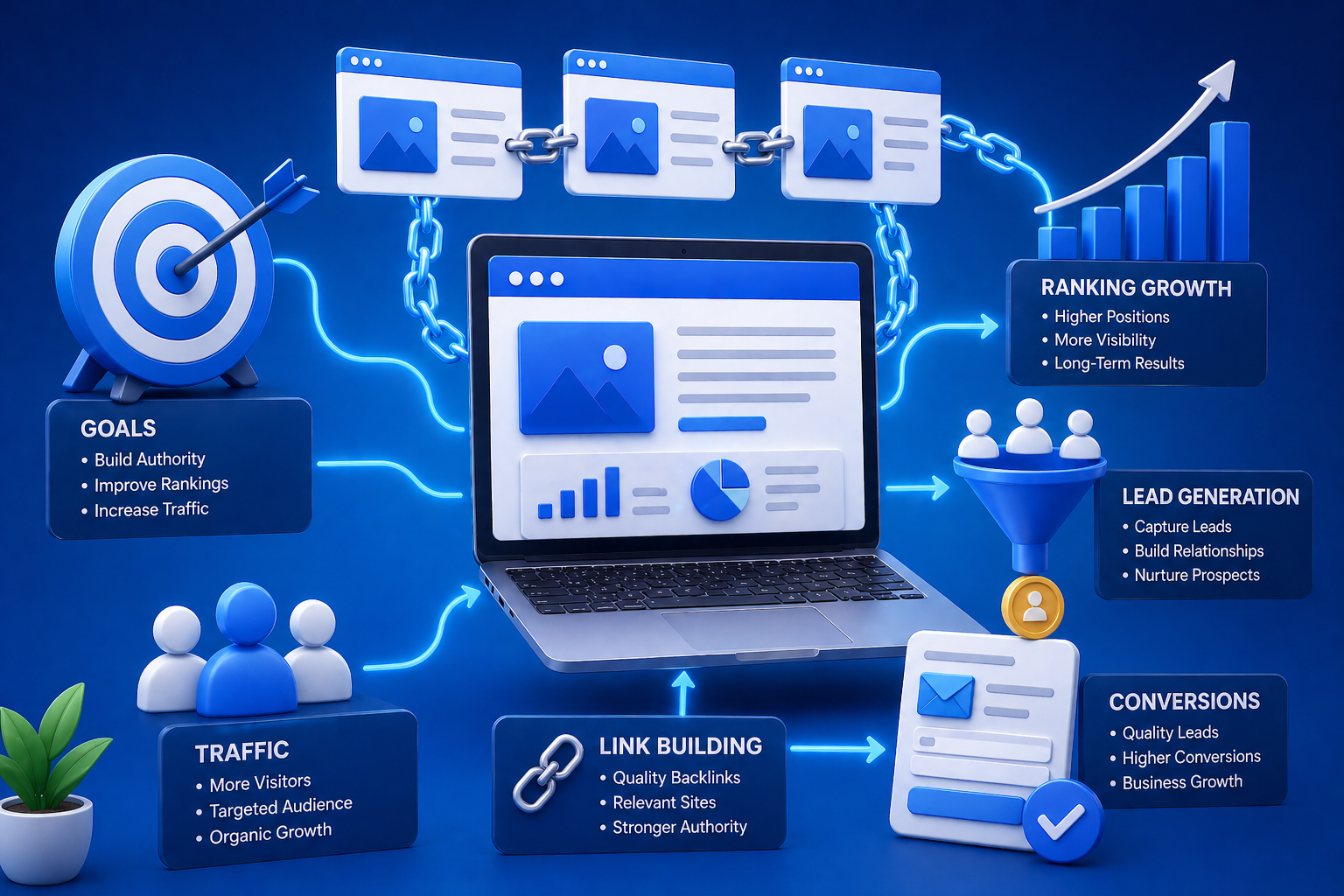
You can use these goals:
Rankings: Build links to pages which require greater authority in search.
Traffic: Gain links on sites that have the ability to generate actual traffic.
Leads: Pay attention to those pages which can convert visitors to enquiries or sales.
By specifying the goal, you make the whole process of link building step by step easier. You are aware of the pages to advertise, what sort of websites to target and what type of backlinks actually do work.
Step 3: Analyze Your Competitors’ Backlinks
Analyze competitor backlinks to identify which links drive rankings, where they come from, and how you can replicate them.
Begin with websites ranking for your target keywords. These sites already use link building strategies that work in your niche.
Focus on these key elements:
- Top-linked pages (blog posts, tools, data reports)
- Referring domains vs total backlinks
- Link types (guest posts, resource pages, mentions)
- Top linking sites (blogs, media, directories)
To extract insights, ask precise questions:
- Which pages earn the highest number of backlinks?
- How many referring domains point to those pages?
- Which types of sites link to them?
- What content formats attract these links?
- Which anchor text patterns appear most frequently?
Next, assess link quality using Domain Rating (DR) or Authority Score. Prioritize links from sites that are both relevant and authoritative.
In addition, review the ratio of follow vs nofollow links to understand how authority is distributed.
Examine link velocity to see how quickly competitors acquire links over time. Consistent growth usually indicates a sustainable strategy.
At this stage, identify both content gaps and link gaps. Content gaps reveal missing topics, while link gaps highlight sites linking to competitors but not to you.
The objective is to uncover replicable link opportunities. Create more useful content, target the same linking domains, and secure stronger backlinks.
Use tools like Ahrefs or Semrush to analyze backlink profiles, compare competitors, and identify new opportunities.
Step 4: Create Link-Worthy Content
Create content that gives other websites a clear reason to link. Without value, even strong outreach will fail.
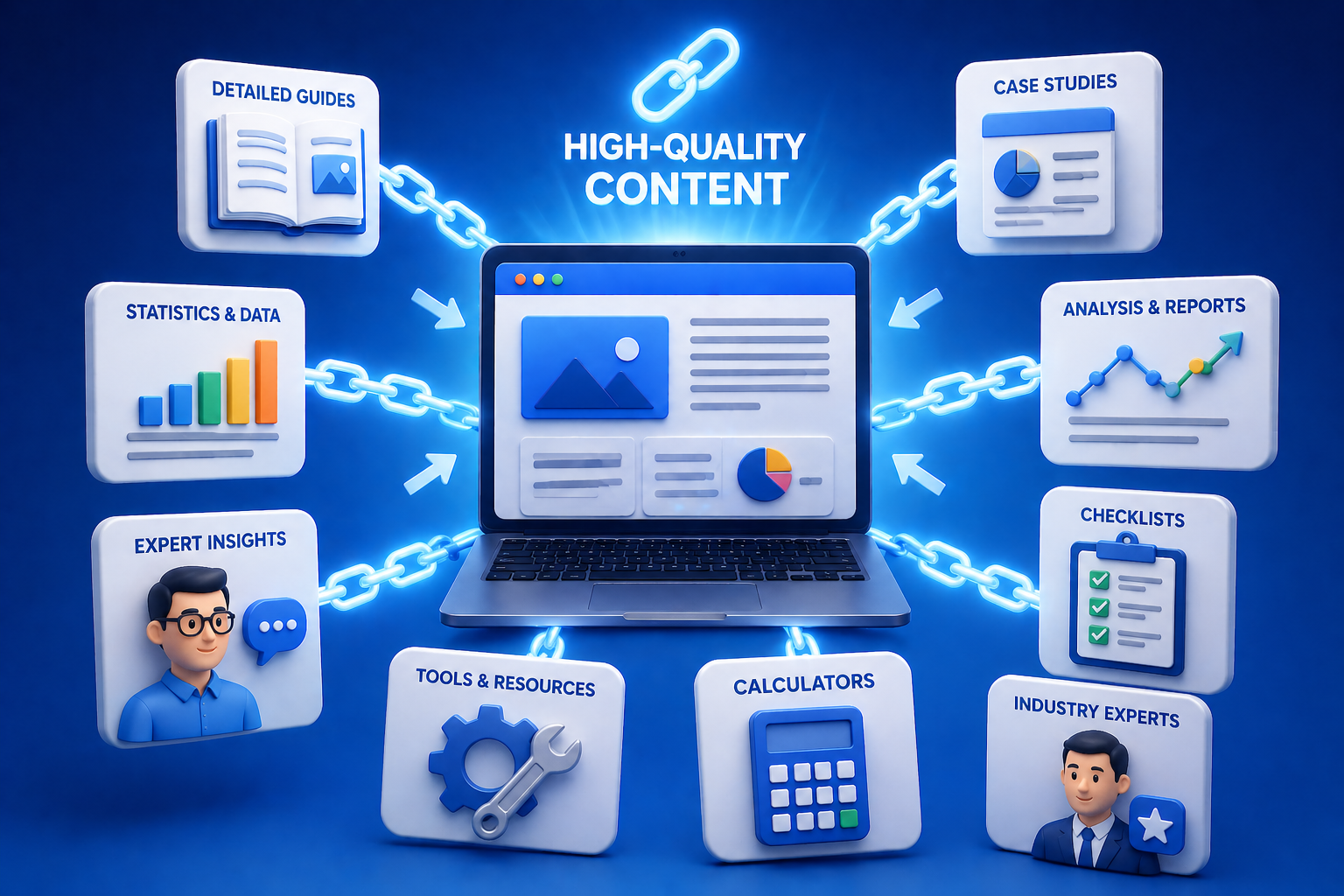
Focus on building linkable assets, which are content types designed to attract backlinks naturally.
Use proven formats such as:
- Detailed guides (complete, step-by-step resources)
- Original data or statistics (surveys, studies, reports)
- Case studies (real results with numbers)
- Free tools or calculators
- Expert roundups
- Visual assets (infographics, checklists)
Match your content to search intent. Informational content earns links, while commercial content drives conversions. Balance both in your strategy.
Prioritize content depth and completeness. Pages that cover a topic fully tend to earn more backlinks than thin content.
Add original insights or data to stand out. Unique content is more likely to be cited as a reference.
Strengthen E-E-A-T signals by showing real experience, expertise, and credibility. Use examples, author profiles, and accurate information.
Understand why people link. Most links come from content that provides citation value, utility, or supporting evidence.
Focus on evergreen content for long-term link growth, and use trending content for short-term visibility.
Content alone is not enough. Promote it through outreach, partnerships, and distribution to increase visibility.
The goal is to create content that is more useful, more trustworthy, and more complete than competing pages.
Step 5: Choose Safe and Effective Link Building Techniques
Choose link building techniques that are safe, relevant, and aligned with your niche. Focus on methods that follow Google guidelines and provide real value.
Use these proven techniques:
1. Guest Posting
Write articles for relevant, high-quality websites and include a contextual backlink. Focus on sites that are niche-relevant, trusted, and editorially selective.
2. Niche Edits (Link Insertions)
Place your link within existing content on relevant pages. This works best when the page already has traffic and authority, and your link adds value.
3. Broken Link Building
Find broken links on relevant websites and suggest your content as a replacement. This method works because it helps site owners fix issues while earning you a backlink.
4. Editorial Links
Earn links naturally when your content is cited by publishers. These links are highly valuable because they are based on merit and relevance.
Focus on contextual, relevant links instead of mass link building, especially when evaluating whether niche edits are safe for SEO. Avoid spammy tactics such as link farms, paid low-quality links, or automated link building.
Use tools like Ahrefs or Semrush to find opportunities, evaluate link quality, and track backlinks.
Step 6: Outreach and Relationship Building
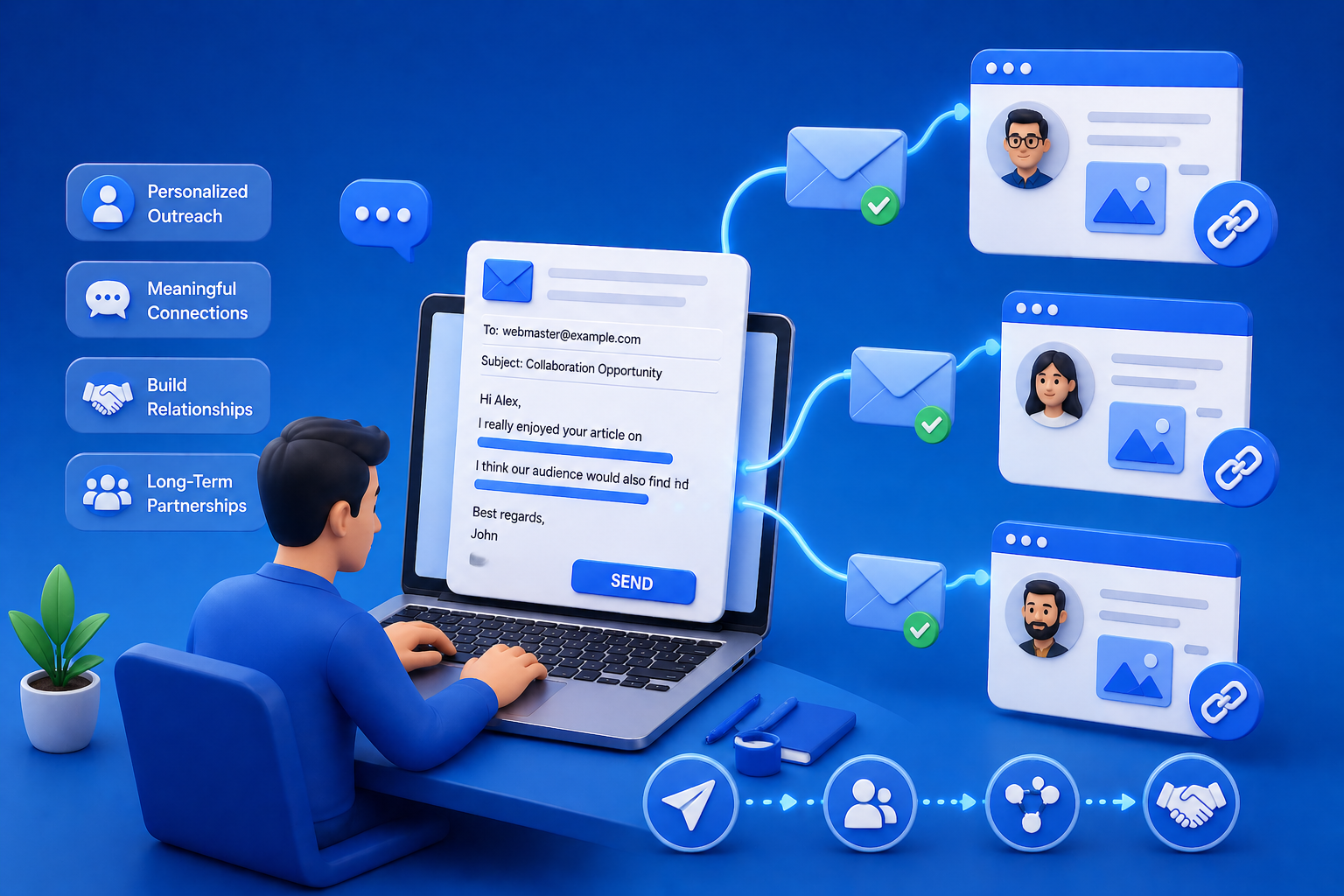
Outreach is the process of contacting relevant websites to earn backlinks. It works best when emails are personalized, clear, and value-driven.
A strong outreach email includes:
- A clear subject line
- A short introduction explaining why you are reaching out
- A specific reason your content is useful to their audience
- A simple and polite request
Personalization is critical. Emails that look copied or generic are often ignored.
Focus on building long-term relationships, not just one-time links. According to Ahrefs, existing relationships increase link success rates and improve response rates.
Follow up once or twice if there is no reply, but avoid spamming.
The goal is to offer value first and make collaboration beneficial for both sides.
Step 7: Anchor Text Optimization
Anchor text is the clickable text in a hyperlink. Optimize it to clearly describe the linked page while keeping it natural.
Use a balanced mix of anchor text types:
- Branded anchors (e.g., your brand name)
- Generic phrases (e.g., “click here” or “learn more”)
- Partial-match keywords (relevant variations of your target keyword)
- Natural sentence-based anchors (contextual links within content)
Avoid overusing exact-match keywords, as this can appear manipulative and harm rankings.
Keep anchor text relevant to the content and place it naturally within sentences. A diverse and natural anchor profile helps improve rankings and reduces SEO risk.
Step 8: Track, Measure and Improve
Track your link building performance to identify what works and improve results. Without data, you cannot optimize your strategy.
Monitor these key metrics:
- Referring domains growth (aim for steady monthly increase)
- Organic traffic from backlinks
- Keyword ranking improvements
- Leads and conversions from referral traffic
- Backlink quality vs quantity
Track link velocity, which is the rate of link acquisition. A natural growth pattern is safer than sudden spikes.
Avoid rapid increases in low-quality backlinks, as they can harm rankings. Regularly review your backlink profile and remove or disavow toxic links.
Use tools like Google Search Console, Ahrefs, and Semrush to track performance, analyze competitors, and find gaps.
Compare your results with competitors to identify missed opportunities. Focus on content and pages that generate both links and traffic.
The goal is continuous improvement. Double down on strategies that drive rankings, traffic, and conversions.
Step 9: Internal Linking
Use internal links to connect related pages and guide users through your website. This helps search engines understand your structure and prioritize important pages.
Link to key page types:
- Informational pages (e.g., What Is Link Building)
- Service pages (e.g., SEO Services, Link Building Services)
- Specific offerings (e.g., Guest Post Service, Niche Edits)
Use contextual links inside content instead of relying only on menus or footers. Add 2 to 5 internal links per page where relevant.
Use descriptive anchor text that reflects the target page topic.
Structure your site using topical clusters, where blog content links to a main service or pillar page.
Internal linking distributes link equity across your site and improves crawlability. It also prevents important pages from becoming orphan pages.
Focus on linking from high-traffic pages to important pages to improve rankings and conversions.
Step 10: In-House vs Professional Services
Choose between in-house and outsourced link building based on your budget, time, and expertise.
In-house link building gives full control and strong brand alignment. It requires a team of writers, outreach specialists, and SEO experts. This approach suits long-term strategies but scales slowly.
Professional services offer faster execution and scalability. Agencies provide established relationships, outreach systems, and proven processes.
In-house requires ongoing hiring and training costs. Outsourcing typically involves fixed or campaign-based pricing.
When outsourcing, focus on relevant, high-quality backlinks. Low-quality links can harm rankings.
Many businesses use a hybrid approach, keeping strategy in-house and outsourcing execution.
Common Mistakes to Avoid
Avoid these common link building mistakes:
- Building links to low-quality content
- Using spammy or irrelevant websites
- Sending generic outreach emails
- Ignoring topical relevance
- Over-optimizing anchor text
- Relying on a single method
Effective link building requires a balanced approach that combines content, outreach, analysis, and consistency.
Conclusion
Understanding How to Do Link Building for SEO in 2026 comes down to one thing: building relevance, authority, and trust, not just collecting backlinks.
To get results, follow a clear process that earns links and improves rankings, targeted traffic, and conversions. Begin with your niche and audience. Then study competitors, create high-value content, and use safe link building techniques. Next, focus on outreach, anchor text balance, and consistent tracking.
High-quality backlinks come from content that solves real problems, relationships built over time, and steady execution. Shortcuts may seem faster, but they rarely deliver lasting results.
Done right, link building strengthens search visibility, builds brand authority, and supports long-term growth.
Stay consistent with these steps, and you will build a backlink profile that drives measurable results and sustainable SEO success.
Stay Ahead in Digital Marketing
Get exclusive insights, trends, and strategies delivered straight to your inbox. Subscribe now!
Web Genie
Driving Digital Growth with Innovation & Strategy
Quick Links
Contact Info
- info@webgenie.io
- +44 7472 732550
- Office 1009 85 Dunstall Hill, Wolverhampton, United Kingdom, WV6 0SR
Social Media
© 2025 Web Genie, All Rights Reserved.